
Last updated November 25, 2026
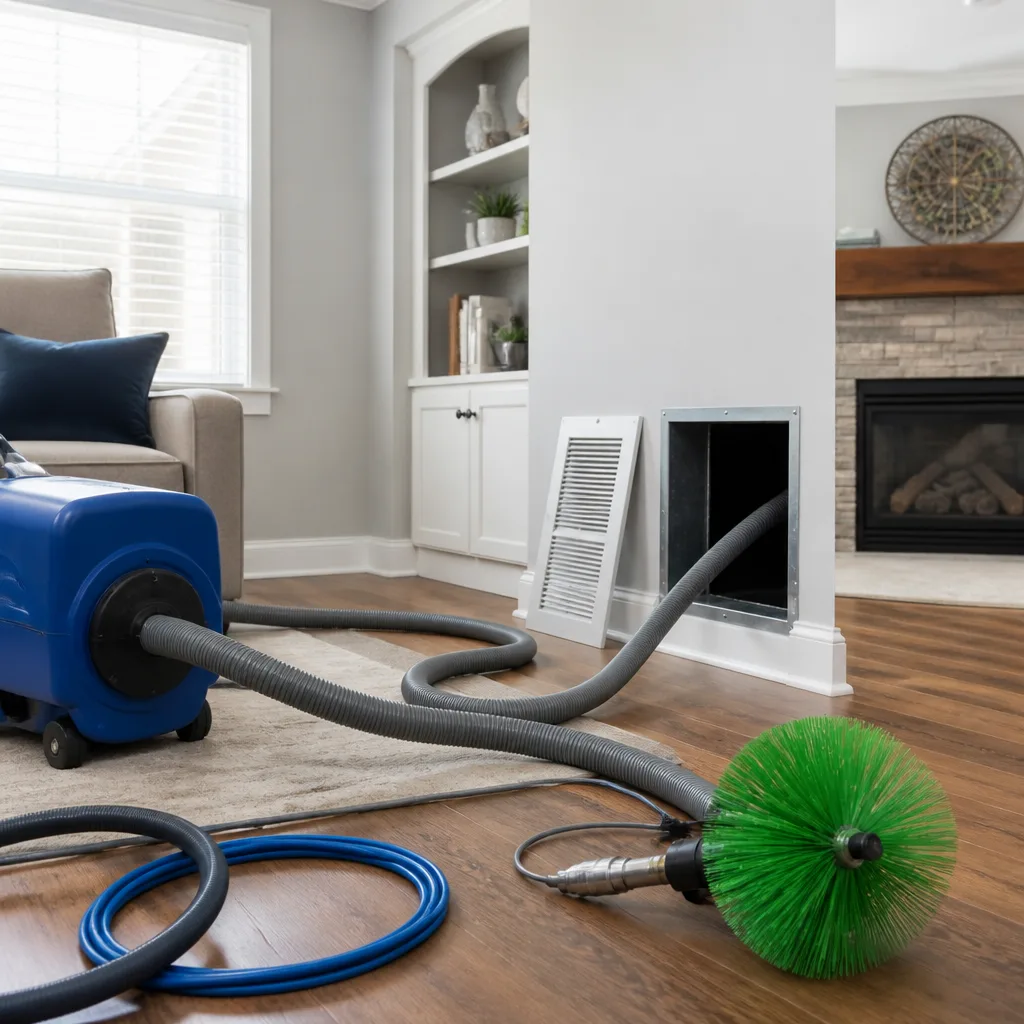 Whole-home duct cleaning
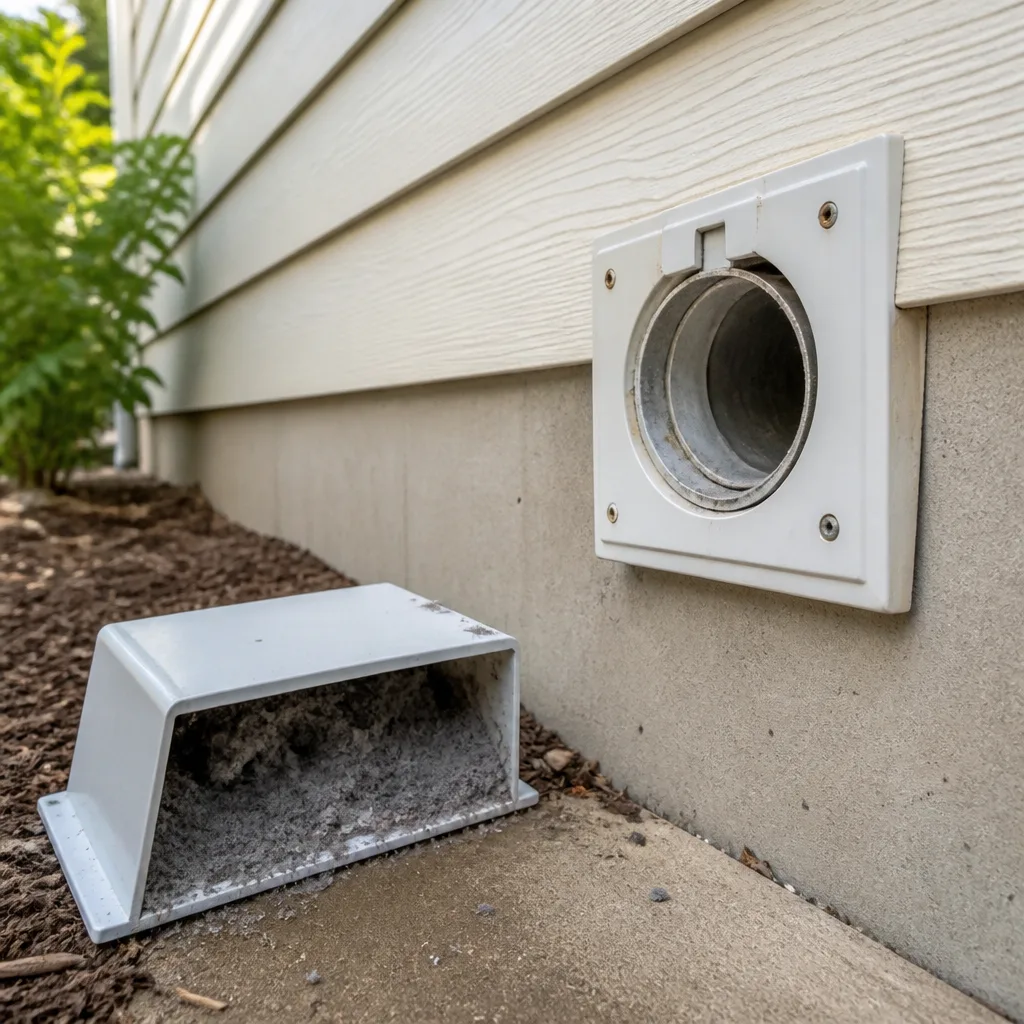 Dryer vent cleaning
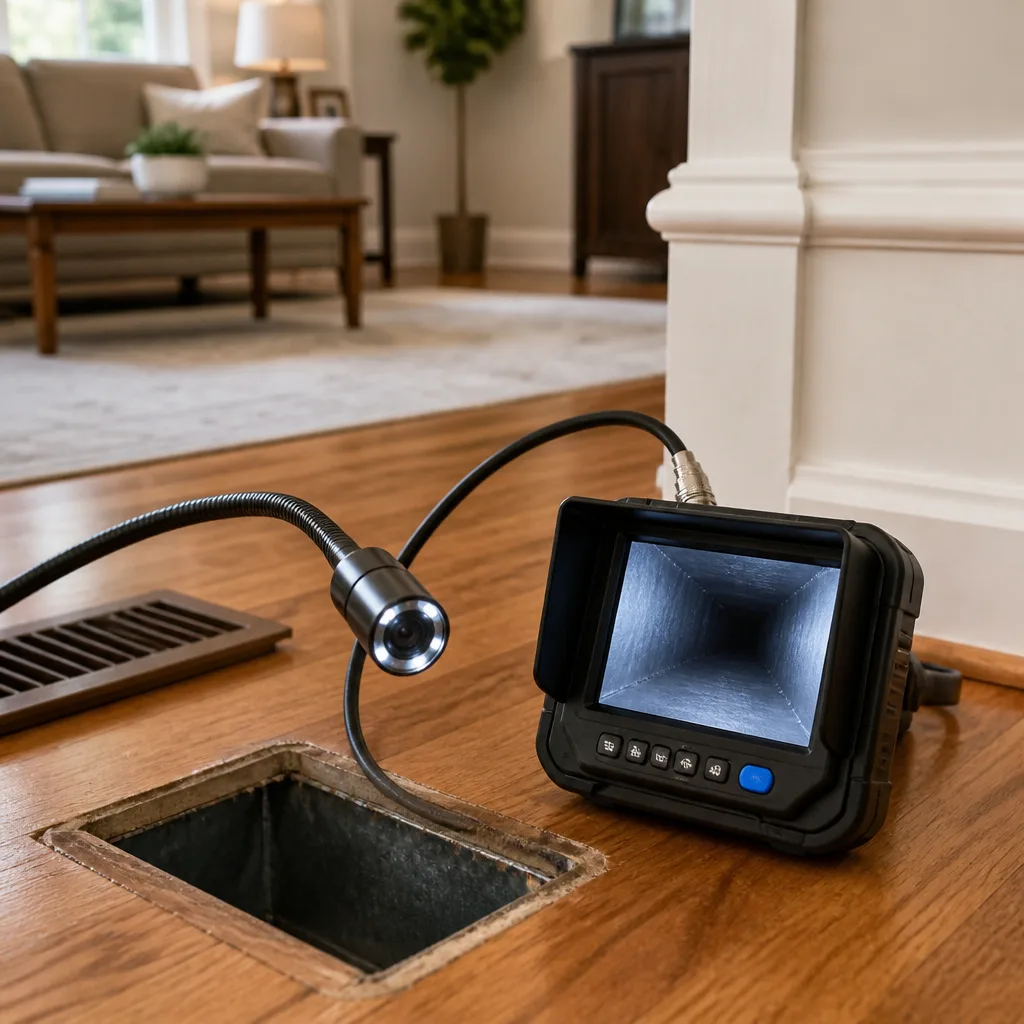 Camera inspection
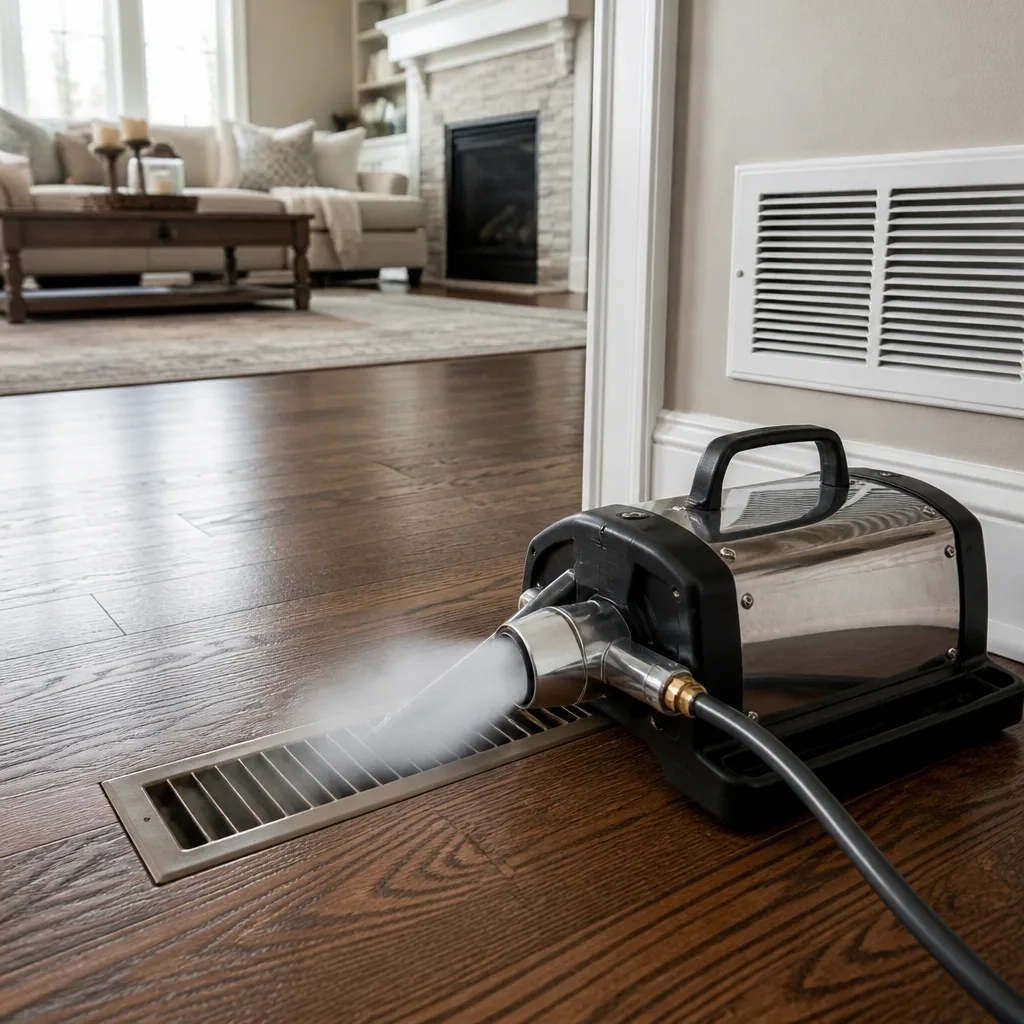 Sanitizing & deodorizing
Whole-system duct and dryer vent check with before-and-after photos - you see exactly what came out of your vents
That "$99 whole-house special" is a bait ad - the real number appears once they are in your hallway, or the "clean" is a shop-vac at the register. We photograph the inside of your ducts before and after instead.
The Complete Guide to Air Duct Cleaning in South Jordan
Most people picture duct cleaning as one big vacuum pulling dust out of a metal box. That picture is wrong, and it’s why so many cleanings don’t hold. Your ducts are a delivery network. The supply plenum pushes conditioned air out, the return boots pull it back, and every joint, flex run and register boot in between touches the air your family breathes. In South Jordan, that network sits inside one of the most particular airsheds in Utah. This guide walks through how the whole system actually works, what a real cleaning should document, and where a cheap visit quietly leaves contamination behind.
Quick Answer
Air duct cleaning in South Jordan should remove contamination at the source, not just vacuum exposed surfaces. A proper job documents duct material and condition, uses professional equipment like Rotobrush or Nikro, cleans the supply and return sides with different protocols, and finishes with sealing and sanitizing where needed. One flat price per system, agreed before work starts.
Styles & brands we work with
- Whole-home duct cleaning
- Dryer vent cleaning
- Camera inspection
- Sanitizing & deodorizing
Table of Contents
- Why South Jordan’s Air Is Different
- Source Removal vs. Contact Vacuuming
- Supply vs. Return: Two Different Jobs
- What a Real Inspection Should Document
- Flex Duct in Newer South Jordan Homes
- Red Flags That Point to an HVAC Problem
- What a Full-System Visit Looks Like
- How Often You Actually Need It
Why South Jordan’s Air Is Different
South Jordan sits inside the Salt Lake Valley’s inversion zone. In winter, cold air gets trapped beneath a warmer layer above, and fine particulate matter (PM2.5) that would normally disperse instead settles low across the valley floor. On bad inversion days, the air outside your home is carrying exactly the kind of fine particulate that a duct system can recirculate. That’s the piece most general duct guides skip.
What this means practically:
- During inversion season, your HVAC pulls outdoor particulate indoors every time it draws fresh air, and that material settles on duct surfaces.
- Each heating cycle lifts a fraction of what’s already settled back into the airstream and pushes it through the same supply runs.
- Over a single winter, a duct system in South Jordan can accumulate a contamination profile that’s closer to a filter’s than most homeowners expect.
The rest of the year tells a different story. Summer in South Jordan is dry and dusty, and spring wind picks up loose soil from surrounding open land east toward the Oquirrh foothills. That dust enters the same duct network through returns and any unsealed joints. Add construction dust from the steady stream of new builds around Daybreak and the broader South Jordan corridor, and you get three distinct contamination seasons stacked on top of each other: winter particulate, spring dust, and summer renovation debris. A cleaning schedule that ignores this rotation misses the point.
Source Removal vs. Contact Vacuuming
There are two fundamentally different kinds of duct cleaning, and the difference determines whether your ducts stay clean past the invoice. Contact vacuuming only removes what’s on surfaces the vacuum can reach. Source removal, the method aligned with NADCA’s standard for assessment, cleaning and restoration of HVAC systems, physically dislodges contamination from duct walls throughout the system and extracts it.
- Contact vacuuming: A vacuum head is run over duct surfaces. Loose dust is captured. Adhered material and material hidden behind joints stays put.
- Source removal: Agitation tools (rotary brushes, air whips and negative-pressure extraction) break contamination loose from every segment of the system, then capture it. Nothing is redistributed into the living space.
In our experience serving South Jordan homeowners, the equipment is the tell. Rotobrush and Nikro systems are purpose-built for source removal. They deliver controlled agitation with HEPA-level extraction, not borrowed shop vacuums. That matters most in homes with long flex duct runs, where dust adheres to the ridged interior in a way a smooth vacuum head can’t reach. Companies that only show up with a truck-mounted vacuum will often charge for a source-removal job and perform contact vacuuming. When you’re comparing bids, ask what agitation tools are used and whether negative pressure is maintained throughout the home. Those two questions alone eliminate most of the shortcuts.
Supply vs. Return: Two Different Jobs
The supply side and the return side of your system handle air in opposite directions, and they collect different debris in different ways. Treating them the same is one of the most common reasons a cleaning looks finished but isn’t.
The return side pulls air from every room through return boots and a central return trunk back to the air handler. It’s the intake, so it collects the largest volume of coarse debris: dust, hair, fiber, pet dander, and whatever comes in on shoes near floor-level returns. It usually needs higher agitation and more extraction time.
The supply side is downstream of the air handler and the filter. It should be cleaner, but it isn’t immune. Fine particulate that slips past the filter coats supply runs, and humid conditions or leaks can let microbial growth set up on the interior. Supply cleaning is more about dislodging adhered film and verifying condition than vacuuming pile.
What happens when only one side is cleaned? Contamination on the untouched side stays active. A cleaned return feeding a contaminated supply run just moves the problem downstream. That’s why South Jordan Air Duct Cleaning treats both sides as a single system in every visit, and it’s one of the reasons we’re specific about what a full-system job includes before you book.
What a Real Inspection Should Document
Every duct cleaning should begin with an inspection, and every inspection should end with documentation you can hold onto. “We looked inside and it’s fine” isn’t a report. Here’s what a professional inspection should capture:
- Duct material and condition. Sheet metal, flex, duct board: each has different cleaning tolerances. Flex with damaged internal liner or duct board with exposed fiber needs to be flagged before cleaning, not during.
- Static pressure readings. Static pressure at the air handler and across the filter tells you whether the system is moving air the way it was designed to. High static pressure suggests restriction (dirty coil, undersized returns, crushed flex), which affects how the system delivers air after cleaning.
- Visible microbial growth. Any sign of moisture, discoloration or growth on duct interiors should be photographed and noted. Abatement Technologies equipment, the same category used in professional contaminant remediation, is what the right response to growth looks like.
- Seal integrity. Loose joints, disconnected runs, and gaps at boots are common, and they’re why Duct Repair & Sealing belongs in the same visit. Clean ducts with unsealed joints re-contaminate faster.
- Filter condition and fit. A loose or under-sized filter lets particulate bypass the media entirely, which puts it right back into the system.
Ask for these items in writing before work begins. If a company can’t provide them, that’s your answer about how the cleaning will go.
Flex Duct in Newer South Jordan Homes
The wave of residential construction across South Jordan over the past two decades, especially in the Daybreak and surrounding communities, left many homes with extensive flex duct runs. Flex is fast to install and forgiving on routing, but it’s harder to clean properly than rigid metal, and most shortcut cleaning methods can’t touch it.
Two problems come up repeatedly:
- Ridged interior surface. The helical wire reinforcement inside flex creates a texture that holds dust in a way smooth metal doesn’t. Only agitation tools (rotary brushes designed for flex, not metal brushes) can dislodge it without tearing the liner.
- Compression and sag. Flex that sags or is compressed at fittings chokes airflow. It also traps debris in low spots. During inspection, run lengths should be checked for kinks, crushed sections and disconnects at boots.
If the liner inside a flex run is already damaged, cleaning can make things worse by releasing fiber. That’s when Duct Repair & Sealing needs to happen alongside the cleaning rather than after. Removing a contaminated segment and sealing a replacement is a better outcome than vacuuming damaged flex and calling it done. For homeowners with questions about how these decisions play out in their own home, our team can walk through it during the estimate.
Red Flags That Point to an HVAC Problem
Duct cleaning sometimes turns up evidence of a mechanical issue that’s outside the ducts themselves. That’s useful, not alarming, as long as you know how to read it.
- Crushed or disconnected flex at a boot. Airflow to a room is compromised. Usually a repair, sometimes a larger HVAC balance issue.
- Heavy soot or dark staining near the air handler. Worth a closer look at combustion appliances and the heat exchanger by a licensed HVAC technician. Safety first.
- Static pressure well above the design range. Suggests a coil or filter restriction, or an undersized return. Cleaning alone won’t fix it.
- Visible microbial growth on coil surfaces or duct board. Often moisture-related, and points to a leak or condensation problem upstream.
- Cold spots or uneven room temperatures that persist after cleaning. Usually a balancing issue in the duct design, not a cleaning issue.
The right interpretation: duct cleaning tells you what your system looks like inside. If what it shows is a mechanical problem, the fix belongs with an HVAC tech. When we surface these findings during a visit, the goal is to give you a clear picture so you can decide what’s next. Whole-home air quality products from Honeywell and Aprilaire, including upgraded filtration and humidity control, are a common next step when the underlying air handler is sound but the filtration isn’t keeping up.
What a Full-System Visit Looks Like
A full-system visit for a South Jordan home follows a clear sequence. Yours will look similar to this:
- Walkthrough and inspection. Duct material, static pressure, filter fit, and visible condition are documented.
- Containment setup. Negative pressure is established with the registers sealed, so dislodged material is captured, not redistributed.
- Return-side cleaning. Agitation and extraction on all return runs and boots.
- Supply-side cleaning. Same process, with tools chosen for the duct material of each run.
- Air handler and coil. Handled under HVAC cleaning, since cleaning the box without cleaning the moving parts and coil is incomplete.
- Sealing. Loose joints and disconnects are addressed so the cleaning actually holds.
- Sanitizing. Where growth or odor is present, a treatment from the Guardsman line is applied after cleaning, not instead of it.
- Verification and handover. Before-and-after photos of your ducts, a summary of findings, and any repair recommendations.
Alongside the duct work, the same visit can address dryer vent cleaning, which is worth folding in because lint buildup in a dryer vent is a leading cause of residential house fires. Bundling the services into one visit means one flat price per system, agreed before any work starts, and no coordinating separate contractors for each piece of the home’s air delivery system.
How Often You Actually Need It
Most South Jordan homes land in the three-to-five-year window for a full duct cleaning, with a few conditions that shorten it:
- Any recent renovation or drywall work (drywall dust settles deep and takes years to clear on its own).
- Pets in the home, especially with carpeted rooms and floor-level returns.
- A home with anyone in the household managing allergies or asthma.
- A move-in to an existing South Jordan home where previous maintenance history is unknown.
- Any visible mold, musty odor, or vermin activity discovered during inspection.
Inversion season alone doesn’t justify an annual cleaning. What does justify a shorter interval is a combination of the above, or a documented problem that’s been resolved and needs periodic monitoring. If you’re between cleanings and the system is doing its job, a filter schedule and a periodic inspection are the useful investments. If inspection turns up a problem, we can tell you what’s worth acting on and what can wait.
Common Mistakes to Avoid
- Booking on price alone. The lowest bid is almost always contact vacuuming dressed up as source removal. Ask about agitation tools and negative-pressure containment before you compare numbers.
- Ignoring the return side. Returns collect more debris than supplies in South Jordan homes. Skipping them means one side of the system stays contaminated and re-seeds the other.
- Skipping sealing. Clean ducts with unsealed joints leak air into crawl spaces and attic voids, dragging particulate back in. Duct Repair & Sealing is part of a full-system job, not an upsell.
- Assuming a filter change replaces a cleaning. A filter catches what’s in the airstream; it doesn’t remove what’s already adhered to duct walls.
- Not requesting before-and-after photos. Documentation of your own ducts is the only way to confirm the work was done as described.
- Overlooking the dryer vent. Dryer vent cleaning belongs on the same schedule as duct cleaning, and most homeowners wait too long between visits.
- Treating cleaning as a fix for airflow problems. If a room is cold or the system is struggling, cleaning won’t solve it. Those are HVAC design or balancing issues that need a technician.
See the difference
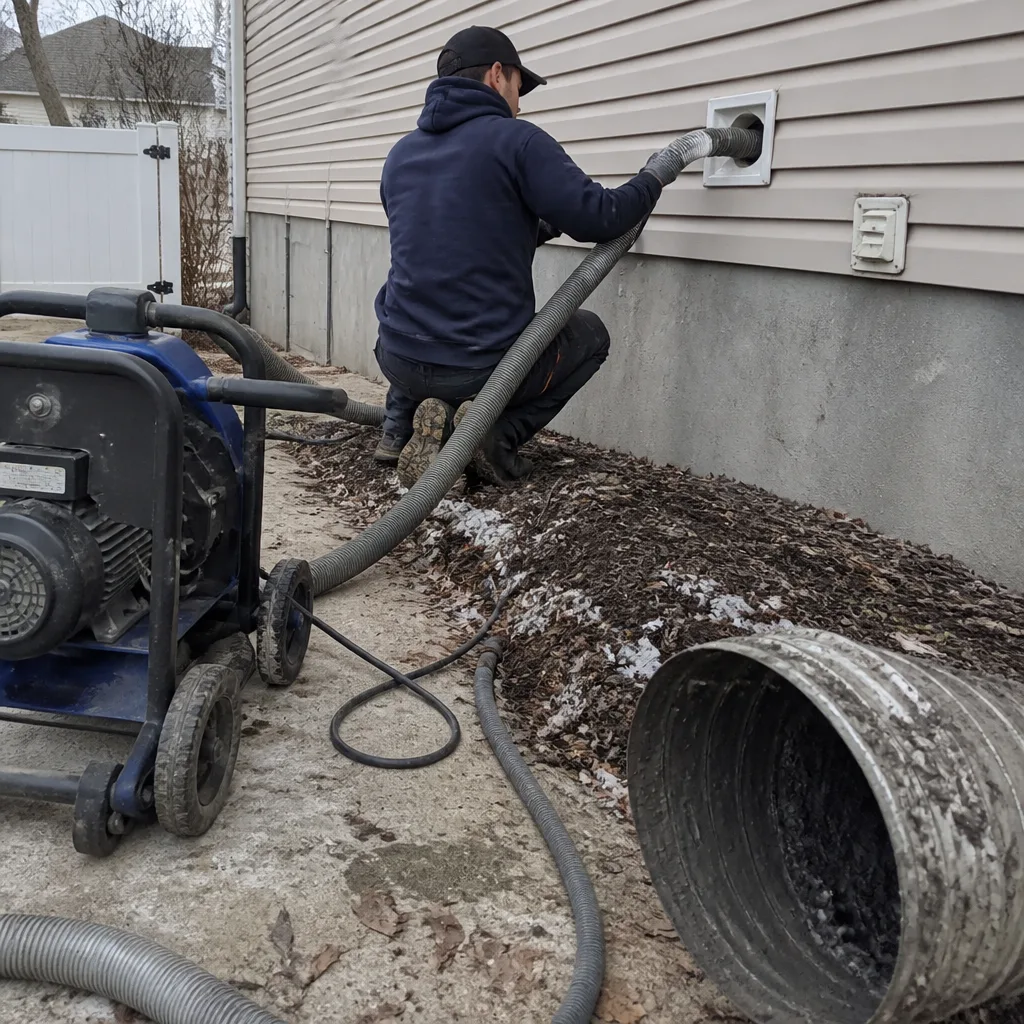 Before
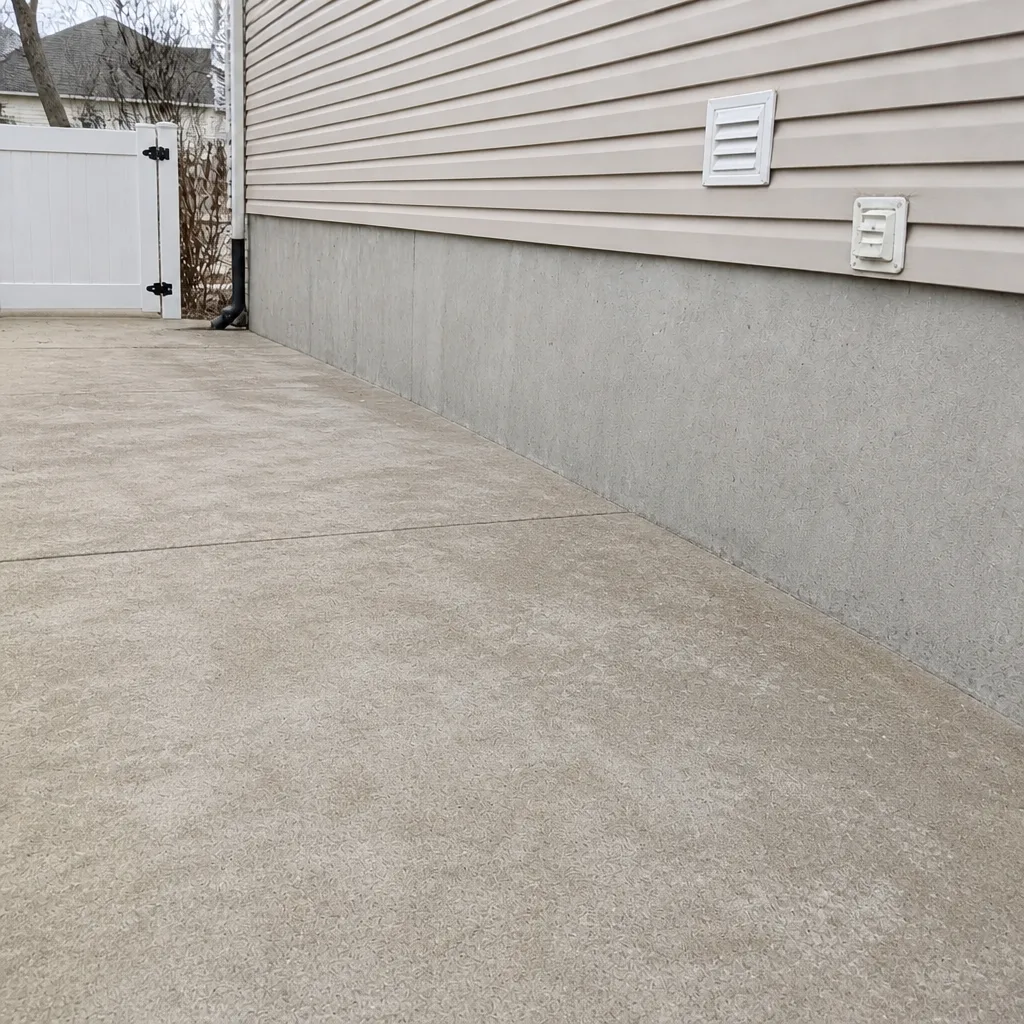 After
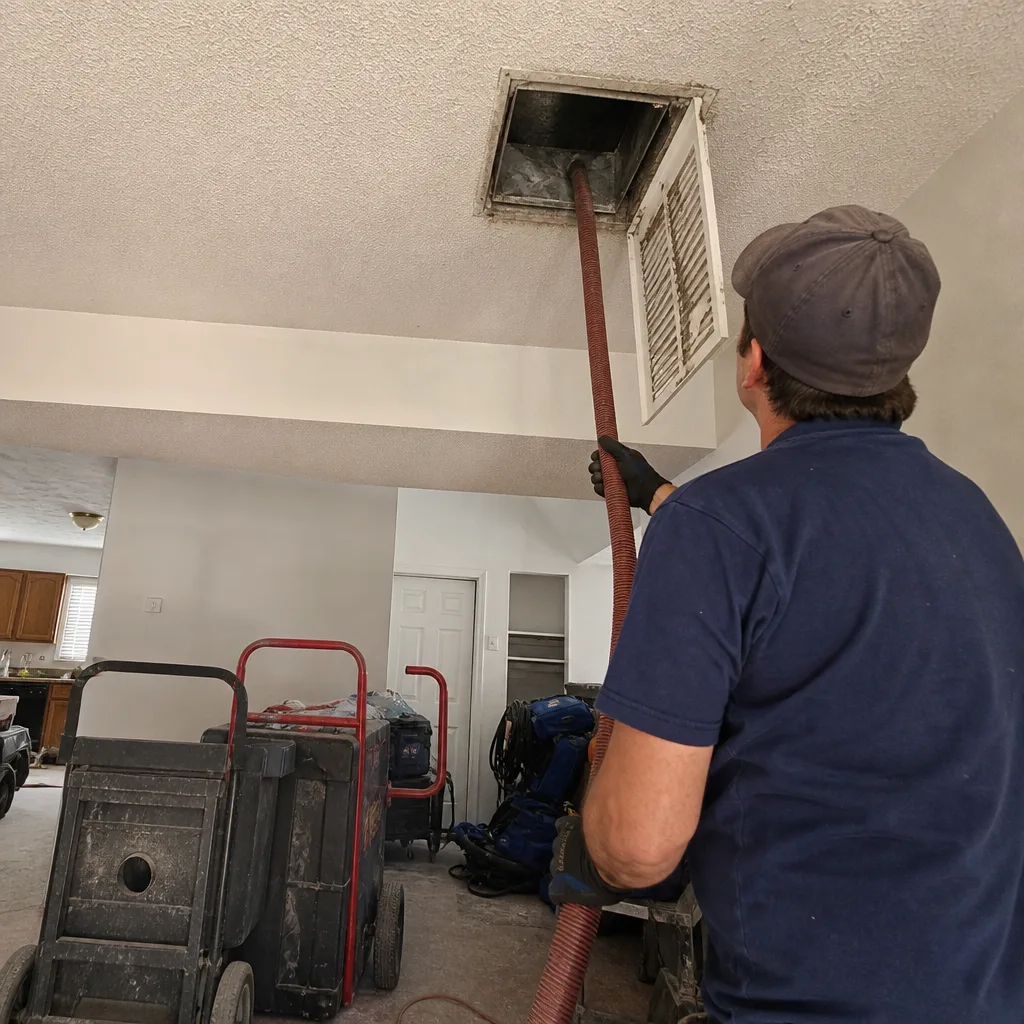 Before
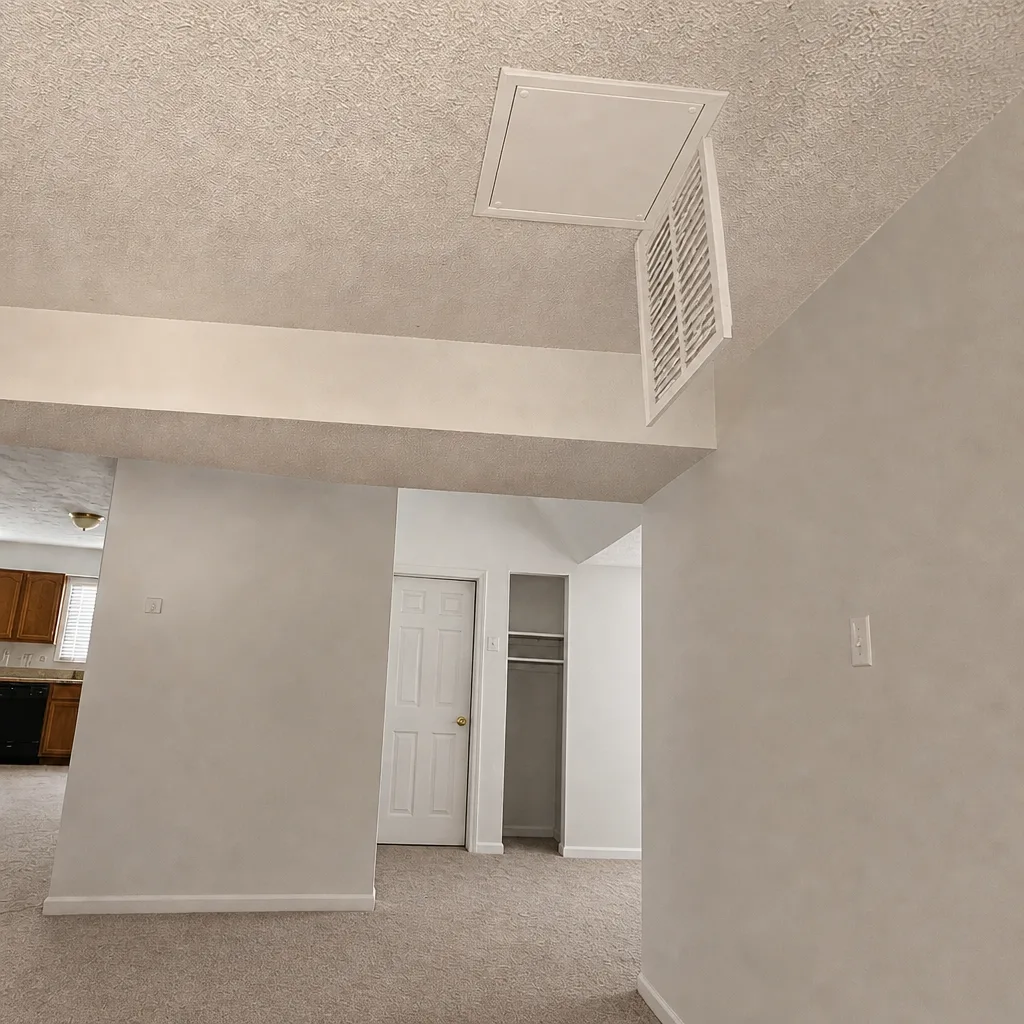 After
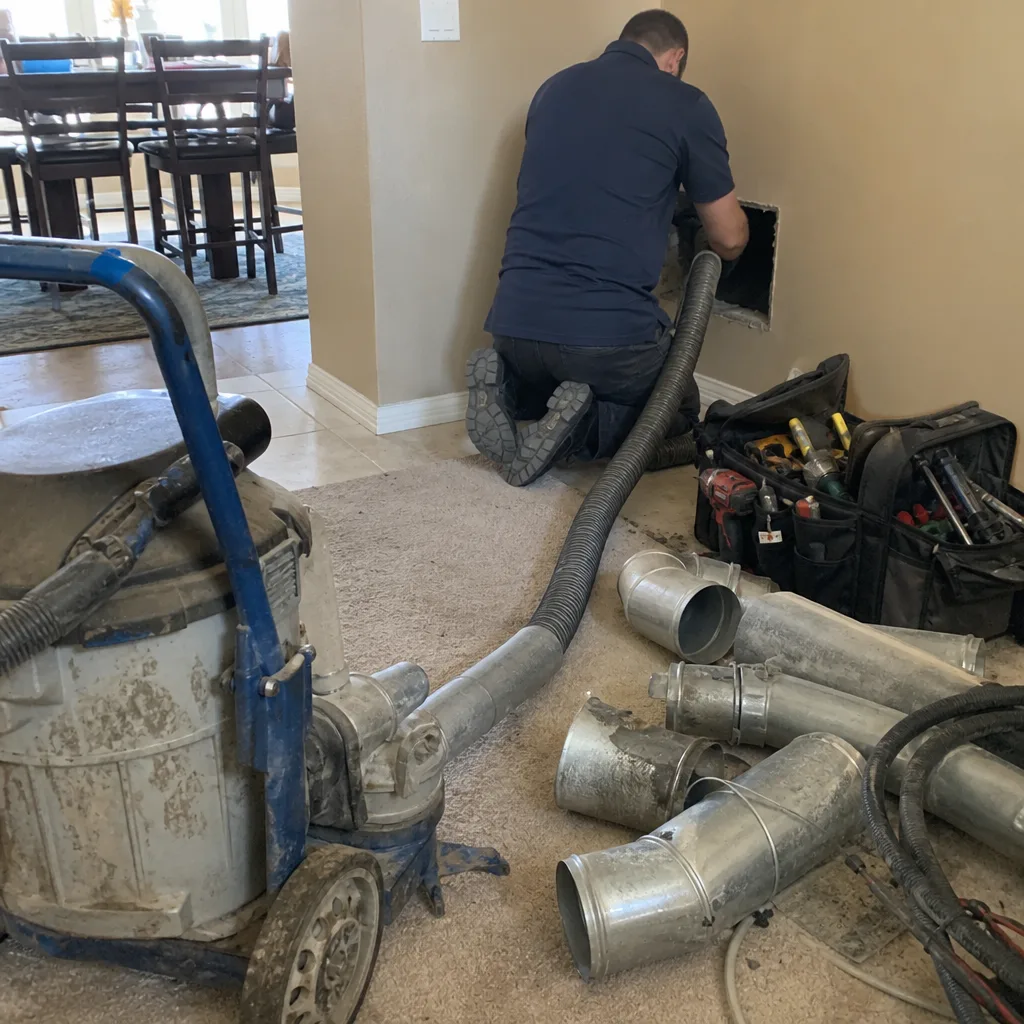 Before
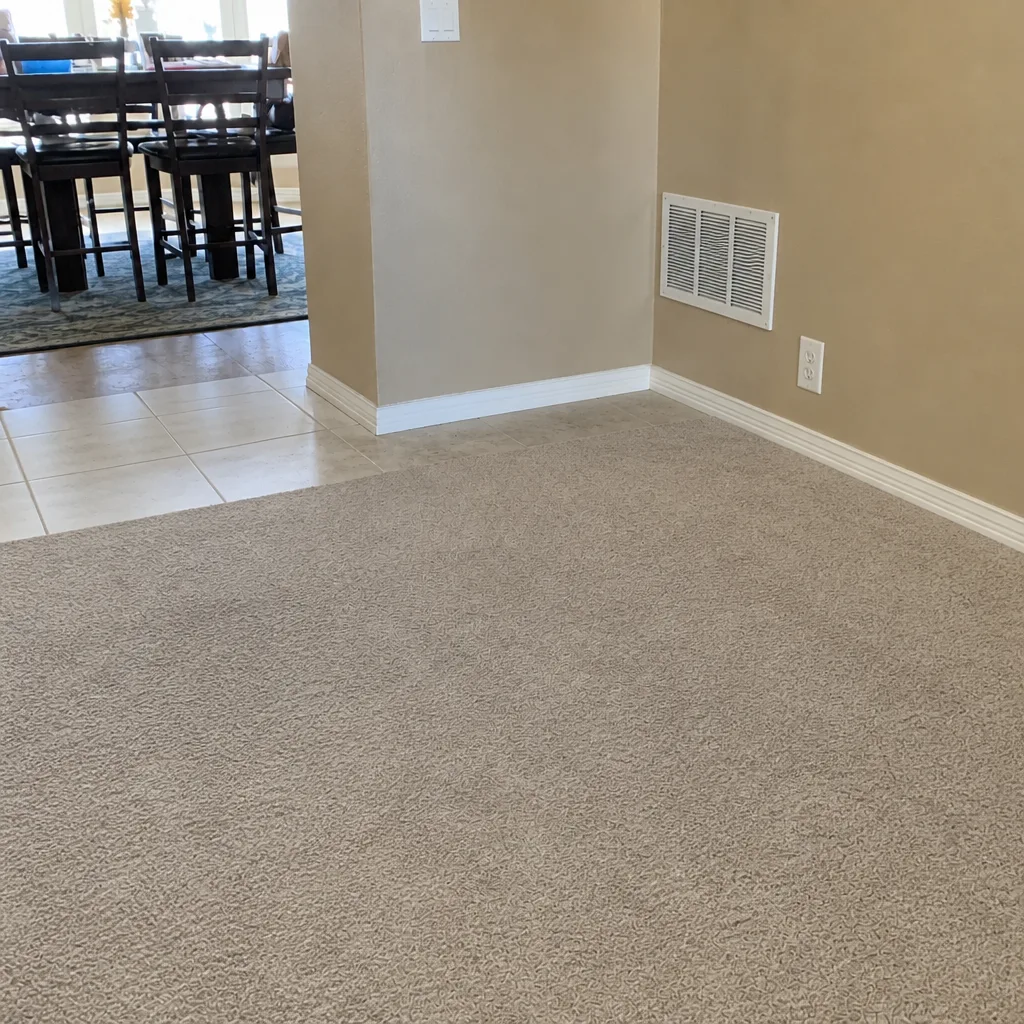 After
When to Call a Professional
Call when you see visible dust blowing from a register after the HVAC has been off, when a room smells musty only when the system runs, or when anyone in the home is reacting to the air. Call when you’ve moved into a South Jordan home and don’t know its duct history, or when a renovation just finished. Call when an inspector has flagged duct condition, or when the dryer is taking longer than it used to. Call when static pressure is high, a return is whistling, or a flex run looks crushed. These are the signs that a full-system visit is worth the call. South Jordan Air Duct Cleaning offers free estimates in South Jordan, with one flat price per system agreed before work starts. Call (877) 820-9450.
Frequently Asked Questions
The right way to price duct cleaning is per system, not per vent, and any honest estimate in South Jordan will reflect that. Whole-home pricing depends on the number of returns, the length of the duct runs, the duct materials involved, and whether sealing or sanitizing is needed. Only an on-site inspection produces a real number. Call (877) 820-9450 for a free estimate, and the price you get is the price you pay, in writing, before work starts.
Because they’re priced for contact vacuuming, not source removal. A low bid usually means limited agitation, no negative-pressure containment, one side of the system skipped, and no sealing after the cleaning. You’re paying for surface touch-ups that re-contaminate within a season. The difference shows up in the equipment (Rotobrush or Nikro versus a borrowed vacuum) and in the before-and-after photos. Call (877) 820-9450 for an estimate on the work you actually need.
Ask for before-and-after photos of your own ducts and a written summary of what was inspected, what was cleaned, and what was flagged. A professional visit documents duct material and condition, filter fit, static pressure if requested, and any visible growth or damage. If a company can’t show you the interior of your ducts before and after, you don’t have evidence the work happened. Call (877) 820-9450 to schedule a visit with documentation.
Most homes land in the three-to-five-year window, with shorter intervals when there’s ongoing pets, a recent renovation, an allergy concern, or a documented problem that’s been resolved. Inversion season in the Salt Lake Valley adds fine particulate load, which shortens the interval in some homes. Interval decisions belong to the inspection, not the calendar. Call (877) 820-9450 for a free estimate on an inspection.
It helps by removing the settled particulate and any microbial growth already in the system, which stops the HVAC from recirculating that material into the rooms you spend the most time in. It doesn’t fix outdoor air, and it doesn’t replace filtration. The combination that works in South Jordan is source-removal cleaning plus a filter (or upgraded whole-home filtration from brands like Honeywell or Aprilaire) matched to the home. Call (877) 820-9450 to talk through what fits your house.
Usually not. A persistently cold or warm room in a South Jordan home is typically a duct design, balancing, or crushed-flex problem, not a dirt problem. Cleaning removes what’s already in the ducts; it doesn’t fix what’s structurally wrong with them. A proper inspection will flag those issues so you can call a licensed HVAC technician for the mechanical fix. Call (877) 820-9450 for an inspection that documents what’s worth acting on.
The Bottom Line
Your duct system isn’t a single part; it’s a delivery network, and in South Jordan it works harder than in most places because of inversion-season particulate, spring dust, and construction debris from a decade of new builds. A cleaning that lasts has three features: source-removal equipment, both supply and return sides addressed, and sealing afterward so the work holds. Before-and-after photos and a written summary are your proof. Anything less, at any price, is a surface fix. When you’re ready to see what’s actually circulating through your home, call (877) 820-9450 for a free estimate. We answer 24/7. Fast dispatch from 7am to 7pm, Sunday through Friday.
Written by the team at South Jordan Air Duct Cleaning.