
Last updated November 25, 2026
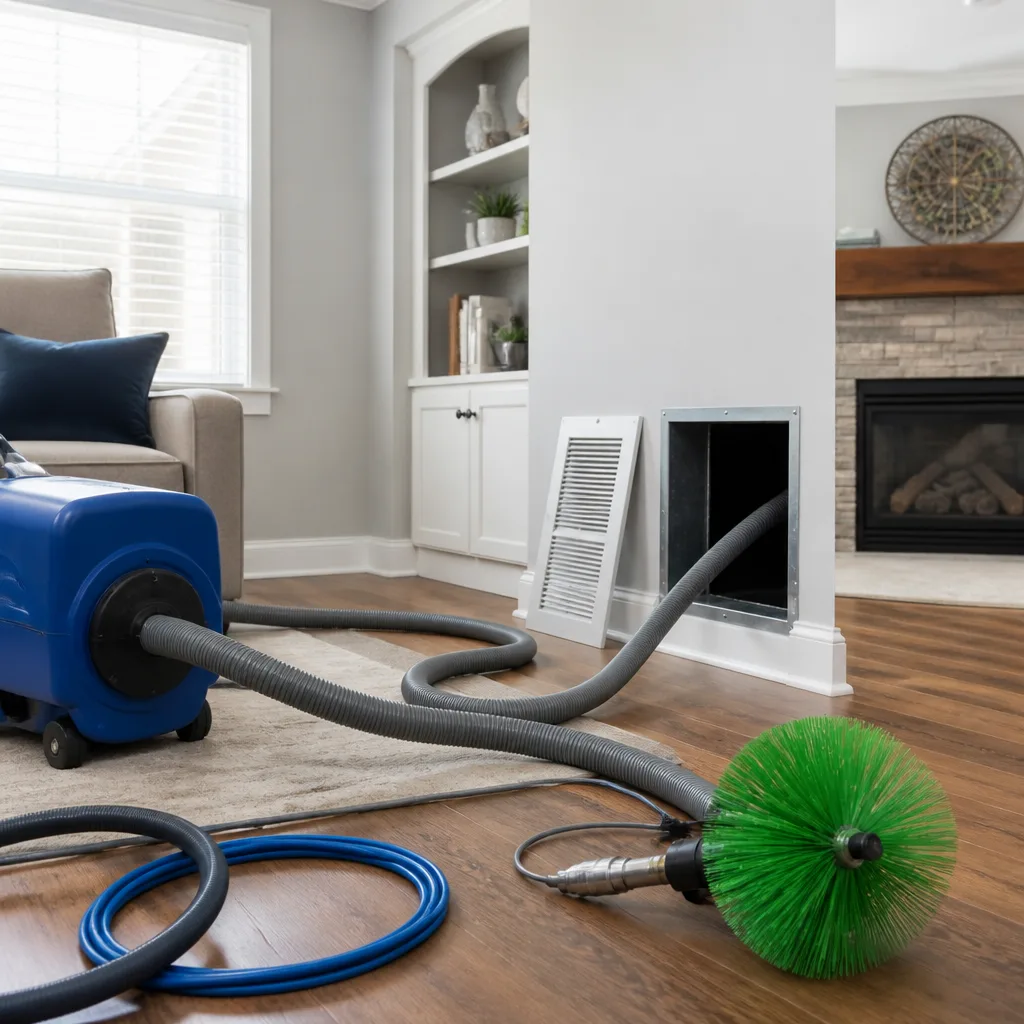 Whole-home duct cleaning
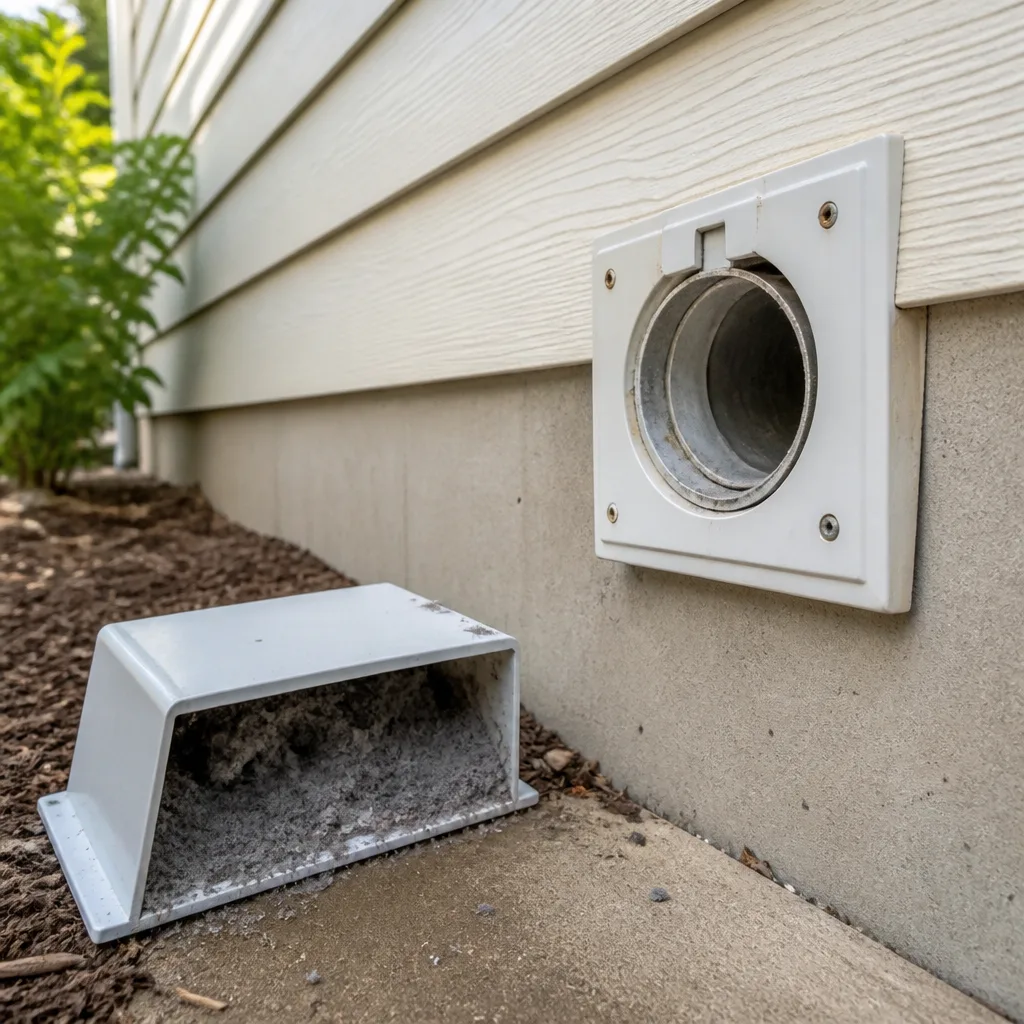 Dryer vent cleaning
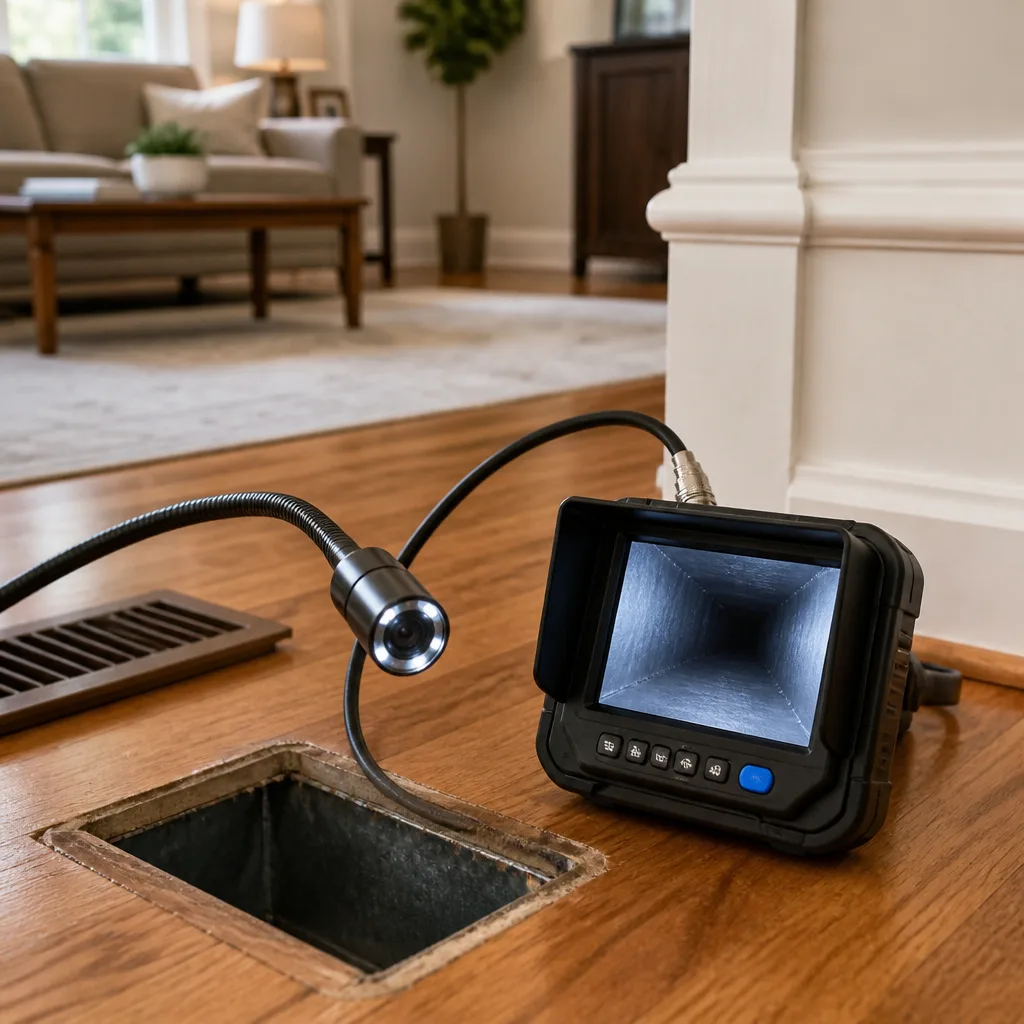 Camera inspection
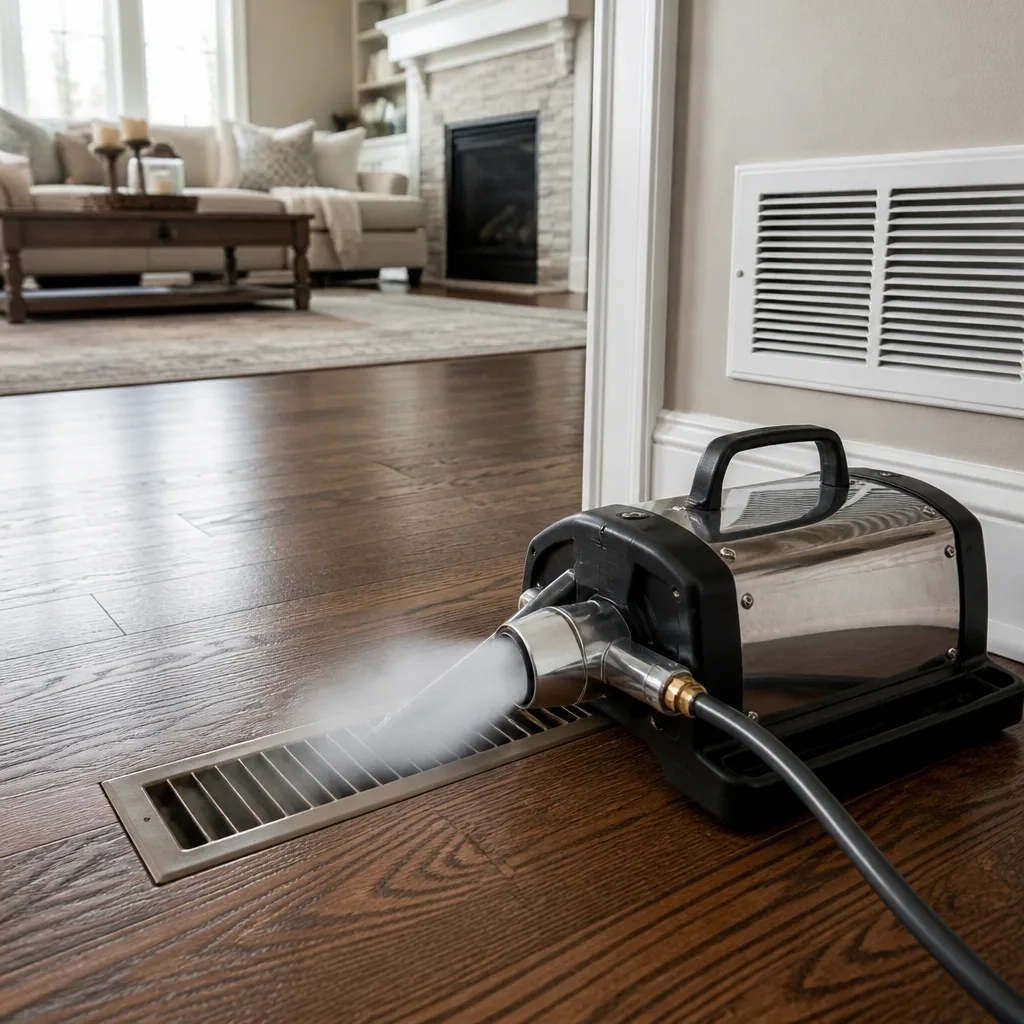 Sanitizing & deodorizing
Whole-system duct and dryer vent check with before-and-after photos - you see exactly what came out of your vents
That "$99 whole-house special" is a bait ad - the real number appears once they are in your hallway, or the "clean" is a shop-vac at the register. We photograph the inside of your ducts before and after instead.
Air Duct Cleaning Maintenance Checklist for South Jordan Homeowners
Most homeowners change the air filter and consider the job done. But a filter that has collapsed inward or bowed out of its frame has already done damage: it stops sealing against the return, the system loses its negative pressure, and unfiltered air carries debris straight past the blower housing. A filter change is one task on a longer list. What follows is the checklist we’d hand a South Jordan homeowner who wants to know what’s actually happening inside their ductwork between professional visits – specific things to look at, specific intervals, and specific thresholds that tell you when to watch and when to call. This is the diagnostic rhythm, not a reminder to book a cleaning.
Quick Answer
A workable air duct maintenance checklist for a South Jordan home has three layers: a monthly walk-through of filters, returns and register airflow; a quarterly inspection of accessible boots, grilles and visible duct surfaces; and an annual professional assessment of the full system including a documented before-and-after. The point is to catch degradation early – a filter that’s bowed, a register that whistles, a dust pattern that changed – so small problems get handled before they turn into a repair estimate.
Styles & brands we work with
- Whole-home duct cleaning
- Dryer vent cleaning
- Camera inspection
- Sanitizing & deodorizing
Table of Contents
- The Monthly Check: Filters, Returns and Airflow
- The Quarterly Inspection: Register Boots and Grilles
- The Annual Assessment: What to Have Done and What to Verify
- Filter Selection for South Jordan’s Dust and Pollen Load
- Building a Baseline With a Particle Counter
- What Discoloration Patterns Actually Tell You
- Watch-and-Monitor vs. Call-a-Professional
The Monthly Check: Filters, Returns and Airflow
The monthly pass takes about ten minutes if you know what you’re looking at. The goal is not to clean anything – it’s to notice change. You’re looking for filters that have moved, registers that behave differently than they did last month, and dust where dust didn’t used to settle.
- Pull the filter and look at its shape, not just its color. A filter that has bowed or collapsed inward has lost its seal against the frame. A filter that looks gray but is still rigid and seated flat is doing its job. A filter that looks gray and is sagging is not, regardless of what the label says about lifespan.
- Check that the filter fits the slot. Gaps around the edges let air bypass the media entirely. If you can see light around the filter edge, unfiltered air is going straight to the blower.
- Walk to every register and hold your hand in front of it. You’re feeling for pressure, not temperature. Any register that feels noticeably weaker than the others is a data point. Note which one.
- Look at return grilles for dust build-up on the slats. A light film is normal. Clumping, matting or visible fibers catching on the louvers means the return is pulling more than it used to.
- Listen at the air handler for new noise. Whistling at a return often means restricted airflow downstream. A low rumble can mean a blower that’s working harder than it should.
Write down what you find. A short note on your phone – date, which register felt weak, whether the filter was bowed – builds a record you can compare to next month. It’s the difference between “I think it’s gotten worse” and “this register has been weak for three months.”
Why airflow matters more than dust
A duct system is designed around a specific static pressure. When filters load up or a run gets partially blocked, that pressure changes and the blower compensates – pulling harder, running longer, drawing more current. Homeowners feel this as higher energy bills or a system that seems to run constantly. It’s a leading indicator, and it shows up long before anything looks visibly dirty.
The Quarterly Inspection: Register Boots and Grilles
Four times a year, go a step further without disassembling anything. The quarterly inspection is about the accessible parts of the system – the pieces you can see from the floor with a flashlight and a step stool.
- Shine a light into each supply register as far as you can see. You’re looking at the inside of the boot: the transition between the round duct and the rectangular grille. A light dust film is normal. Dark streaks, matting, or anything that looks like peeling material is not.
- Check the caulk line around the ceiling boot. Cracks in the seal between the boot and the drywall let attic or wall-cavity air into the supply stream. That’s a duct-sealing issue, and it’s not visible from the floor unless you look for it.
- Inspect return grilles for warp or sag. Older return grilles can sag at the center, which changes how air enters and can cause whistling.
- Look at the visible ductwork in the basement, garage or utility closet. Any flexible duct that’s kinked, crushed or sagging between hangers is losing airflow. Any duct tape that’s peeling or adhesive that’s dried out is a leak site.
- Snap a photo of each register you check. Same angle each quarter. This becomes your visual record, and it’s what lets you see a dust pattern developing rather than guessing.
South Jordan homes span a wide range of construction vintages, and the housing stock matters here. Older homes in neighborhoods like Daybreak’s original phases or the established streets near South Jordan Parkway often have ductwork that’s been through one or two HVAC replacements. Flexible runs added during a replacement can be routed differently than the original design, and the connections at the plenum are where leaks tend to develop. Newer builds in the southern part of the city tend to have tighter duct systems but more problems with seal integrity at the ceiling boots where the drywall crew and HVAC crew sequenced too close together.
What not to do during a quarterly check
Don’t pull register covers off if you’re not prepared to reinstall them properly – a loose grille vibrates and can work itself free. Don’t reach inside a supply boot with a vacuum or a rag, because the interior of flexible duct is thin and tears easily, and a tear you can’t see is worse than the dust you were trying to address. Don’t spray anything into the ductwork, including air fresheners or “duct cleaners” from the hardware store; those products leave residue that later attracts dust. Anything that requires the duct to be open belongs to a professional visit.
The Annual Assessment: What to Have Done and What to Verify
Once a year, the system needs a professional look. In our experience, the value of that visit is not just the cleaning – it’s the assessment that goes with it. A proper annual service on a South Jordan home should cover five things, and you should be able to verify each one.
- Full-system cleaning with documented access. That means every supply and return opening, plus the air handler and the plenum. If a provider works only from the registers and never opens the unit, the blower housing and evaporator coil aren’t getting cleaned, and that’s where a lot of the contamination lives.
- Before-and-after photos of the same locations. Ask them to show you the plenum interior, the blower compartment and at least two trunk runs. Same angle, same lighting. If you can’t see a difference, the work didn’t happen the way you were told it did.
- A visual check of the accessible duct run for damage. Crushed flex, disconnected joints, torn liner – any of these means the cleaning is only half the job. That’s where air duct cleaning and duct repair have to be handled as one scope, not two separate visits. Repair and sealing close the openings that let contamination back in.
- A sanitizing decision made on evidence. Not every system needs sanitizing. If there’s visible biological growth, musty odor or a recent water event, the conversation changes. When sanitizing is appropriate, the products used matter – Guardsman-line treatments are a recognized standard for protective coatings.
- An honest answer on what your system doesn’t need. A professional who tells you everything is urgent on the first visit is telling you something about how they sell. A professional-grade assessment names the three or four things that are actually wrong and leaves the rest alone.
The equipment behind that visit matters more than most homeowners realize. Rotobrush and Nikro are two of the most recognized professional duct-cleaning equipment brands in the HVAC service trade, and they’re built for this work specifically rather than adapted from general construction tools. Abatement Technologies equipment comes from the same category used in professional air-contaminant remediation, which matters for jobs where the source is biological rather than just dust. When you’re comparing proposals, ask what equipment will be used and whether the provider can name it. An operator who can is an operator who does the work.
Interior climate control people – the ones who do this every day – know that South Jordan’s winter inversions trap cold, still air against the valley floor, and the airborne particulate that settles during those stretches gets pulled into return air. Spring brings the pollen load off the Wasatch foothills. Between the two, a home’s ductwork sees more seasonal particulate than it would in a milder climate. That’s the reason we encourage an annual assessment rather than stretching to two or three years: the load is real, and it accumulates.
Filter Selection for South Jordan’s Dust and Pollen Load
Here’s where most filter advice goes wrong: it tells homeowners to buy the highest MERV rating that fits. Higher MERV means smaller particles get caught, which sounds like pure upside. It isn’t. Every filter creates resistance, and resistance is a load on the blower. A filter with a high MERV rating on a system whose blower isn’t rated for that static pressure will restrict airflow, force the blower to work harder, and in some cases cause the coil to run cold enough to condense moisture where it shouldn’t.
The right filter is the one that matches your blower’s rated static pressure. That number is on the system’s spec plate or in the manual, and any HVAC technician can tell you what it is in under a minute. Write it down. Then choose a filter whose pressure drop at your operating airflow stays within it.
A practical filter rhythm for South Jordan
- Spring (March through May): The pollen load off the foothills is the heaviest of the year. This is when a slightly higher-MERV filter earns its cost – but only if the system can handle it. Check the filter monthly rather than on the label schedule; the label assumes average conditions, not a heavy pollen spring.
- Summer (June through August): The AC is running hard and pulling outdoor dust off the valley floor. Filter changes every 60 to 90 days are typical for a standard 1-inch filter.
- Fall (September through November): Wind carries dust and dried plant material. This is a good time to go with a basic filter and focus your attention on return grille cleanliness instead.
- Winter (December through February): Inversion season. Cold air settles and holds particulate close to the ground, and your return pulls from indoor air that’s been recycling longer than usual. Keep the filter fresh and watch for a musty smell, which can mean the system is moving less air than it should.
Whole-home filtration is a different conversation than a 1-inch slot filter. Brands like Honeywell and Aprilaire set the standard for in-duct media cabinets and humidification control, and those systems hold far more media than a standard filter, so they run longer between changes and catch more at a given pressure drop. If your home has one, the maintenance schedule is different and the filter change interval is measured in months, not weeks. If you don’t have one, adding one is a real decision – worth discussing with whoever services your system, because it changes the pressure profile.
Building a Baseline With a Particle Counter
You can’t manage what you can’t measure. An inexpensive handheld particle counter – the kind used for indoor air quality checks, not lab-grade equipment – gives you a number to work with, and that number is worth more than any impression of how the air “feels.”
- Take your baseline before any work is done. Choose three spots: the main living area, the bedroom you sleep in, and the hallway nearest the return grille. Run the counter at each spot for the same length of time, with the HVAC running normally. Record the date, time, outdoor conditions and the reading.
- Repeat under the same conditions. Same time of day, same HVAC state, similar outdoor weather. A reading taken on a windy day during pollen season and compared to a reading after a rainstorm tells you nothing about your system.
- Watch for the pattern more than the number. A single reading is noise. Three readings over three months is a trend. If the trend moves upward in the same room while other rooms stay flat, you have a localized source – often that room’s supply run or return.
- Retest after professional cleaning. Same spots, same conditions, within the first week. This is your before-and-after record, and it’s what tells you the visit accomplished something measurable.
One caveat: don’t chase a perfect number. Homes are not cleanrooms, and indoor particulate will never be zero. The value of the counter is relative – is the trend going up, down or flat, and does a specific room behave differently from the rest. That’s what you’re tracking. South Jordan sits in a valley where winter air movement is slow and summer dust is real, so a baseline taken in February will look different from one taken in June, and that’s normal.
What Discoloration Patterns Actually Tell You
Discoloration is a diagnostic language. Once you know how to read it, a register grille is telling you something more useful than “it’s dirty.”
- Even, light gray film across the whole grille. Normal. This is the expected dust load from months of operation, and it doesn’t signal a problem.
- Dark streaks radiating from the corners or edges of the boot. Air is leaking at the boot-to-drywall seal and carrying dust with it. That gap is drawing from the wall cavity, and those streaks will return after cleaning until the seal is fixed. Seal repair is part of the job, not an add-on.
- A distinct dark ring around the perimeter of the grille with a clean center. Airflow is bypassing the center of the grille and concentrating at the edges. Often the sign of a return grille that’s too small for the volume it’s pulling.
- Gray-black matting with visible fiber structure. This is not household dust – it’s usually lint, and lint this dense means the return is pulling from an area with textile load, such as a laundry room or a bedroom with heavy carpet traffic. Worth a look at whether that return is even the right place for a return.
- Yellowish-brown staining with a musty smell. This is a moisture signature, not a dust signature. Something upstream is condensing or leaking. That’s a call-a-professional now situation, and it’s a case where sanitizing and mold assessment come before any cleaning.
- White or powdery residue. Sometimes drywall dust from construction or a renovation. Sometimes efflorescence, which means moisture has been moving through a surface. Both deserve a professional look.
When you see a pattern, photograph it, note where on the register it appears, and compare to your photo from the previous quarter. A pattern that’s stable is information. A pattern that’s spreading is a signal.
Watch-and-Monitor vs. Call-a-Professional
Not every finding needs a call. The checklist is designed to help you sort findings into two piles: the ones that need a professional now, and the ones that need a note and a recheck in 30 days.
Watch and recheck in 30 days
- A single register that feels slightly weaker than the others, with no other symptoms.
- Light gray film on return grilles that looks similar to last quarter.
- Particle counter readings that have moved up modestly but stayed within the seasonal range.
- Minor dust settling on horizontal surfaces in one room.
Call a professional now
- Any musty or unusual odor coming from a register or return.
- Yellowish-brown staining on a register or grille, or any visible moisture inside a duct.
- A filter that has bowed, collapsed or is no longer sealing against its frame – fix the cause, not just the filter.
- Visible duct damage: crushed runs, disconnected joints, peeling tape, torn liner.
- Visible biological growth on any accessible duct surface.
- A system that runs noticeably longer than usual without a change in outdoor temperature.
- Airflow that has dropped at multiple registers simultaneously.
When you call, the value of your checklist is that you can give the technician specifics: which register, since when, what you’ve observed. That turns a diagnostic guess into a directed inspection, and it usually shortens the visit.
Common Mistakes to Avoid
- Treating a filter change as the whole checklist. The filter is one component in a system that also includes the return, the plenum, the trunk, the boot and the blower. A filter change without checking the rest is a good habit that stops short of being a maintenance routine.
- Buying the highest-MERV filter on the shelf. Without matching it to your blower’s rated static pressure, a high-MERV filter can restrict airflow and put real strain on the blower motor. Check the spec plate first.
- Trusting “we cleaned it” without photos. Before-and-after images of the same location are the standard for verifying the work, and any provider who won’t show them is telling you how they do business.
- Cleaning the ducts without sealing the leaks. Newly cleaned ducts with open boot-to-drywall gaps will pull the same wall-cavity dust back into the airstream in weeks. Cleaning and sealing go together, or the cleaning is short-lived.
- Vacuuming out return boxes yourself. Flexible duct interior is thin, and a household vacuum attachment can tear it. A tear you created is worse than the dust you were after, and it’s not visible without disassembly.
- Ignoring a musty smell in summer. A musty smell on a South Jordan system in July is a moisture signal, and moisture is what feeds growth. Regular cleaning won’t solve it; identifying the moisture source will.
- Skipping the baseline reading. Without a particle counter baseline, you have impressions instead of data, and it’s impossible to tell whether professional cleaning actually helped. The measurement is what makes the checklist useful.
See the difference
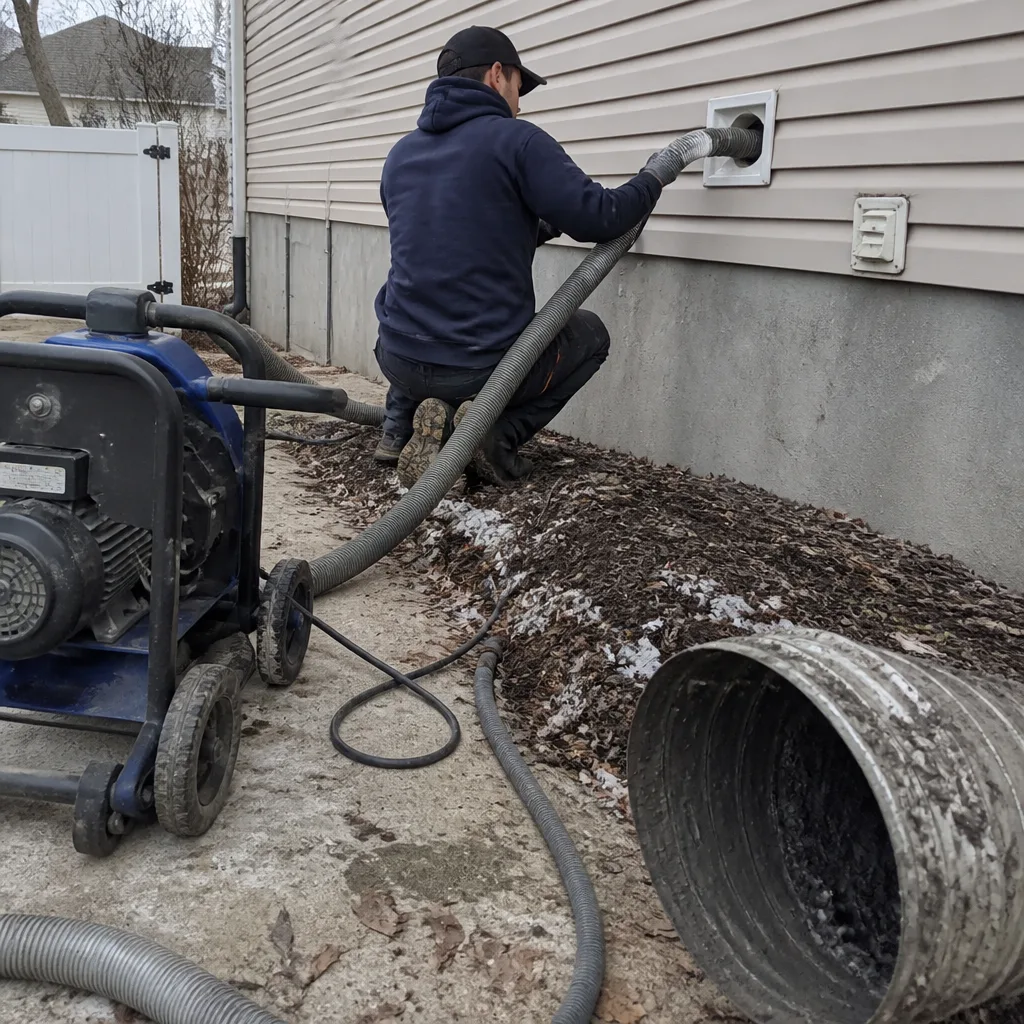 Before
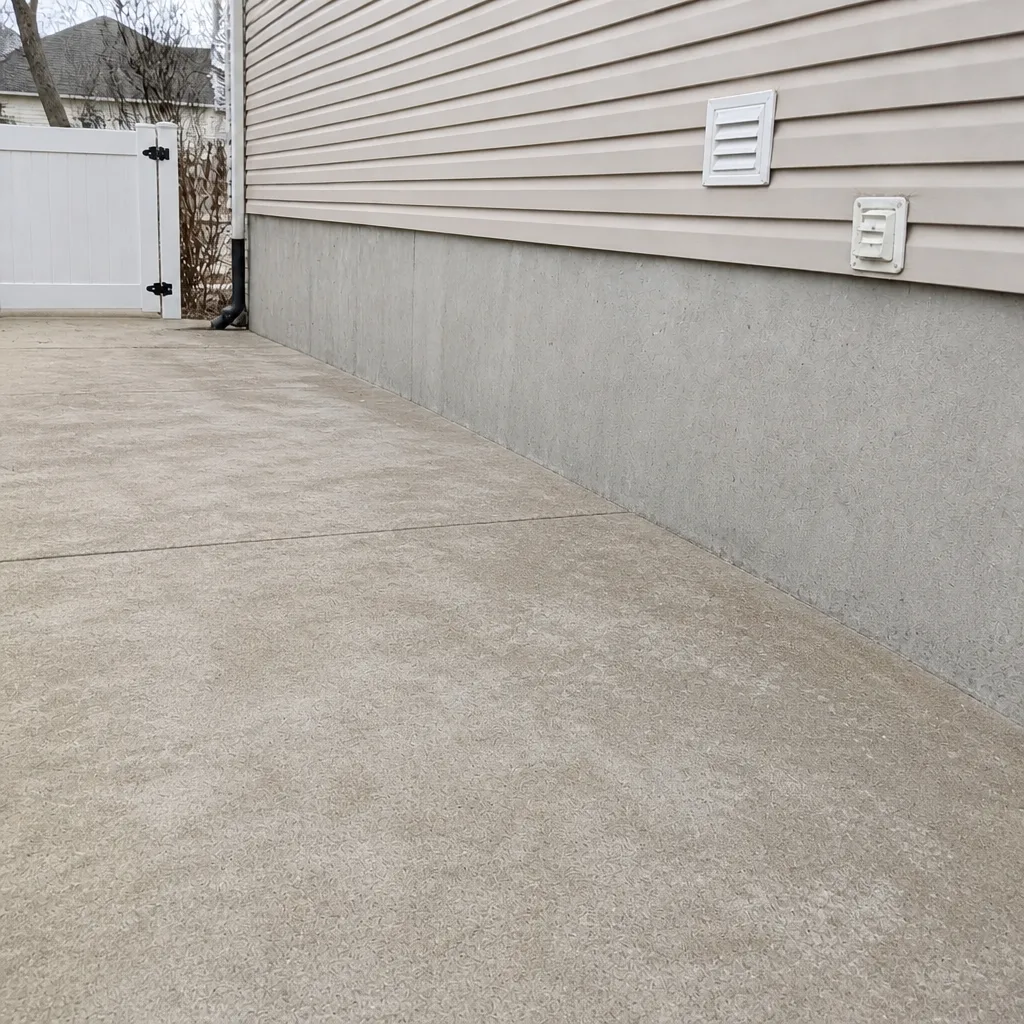 After
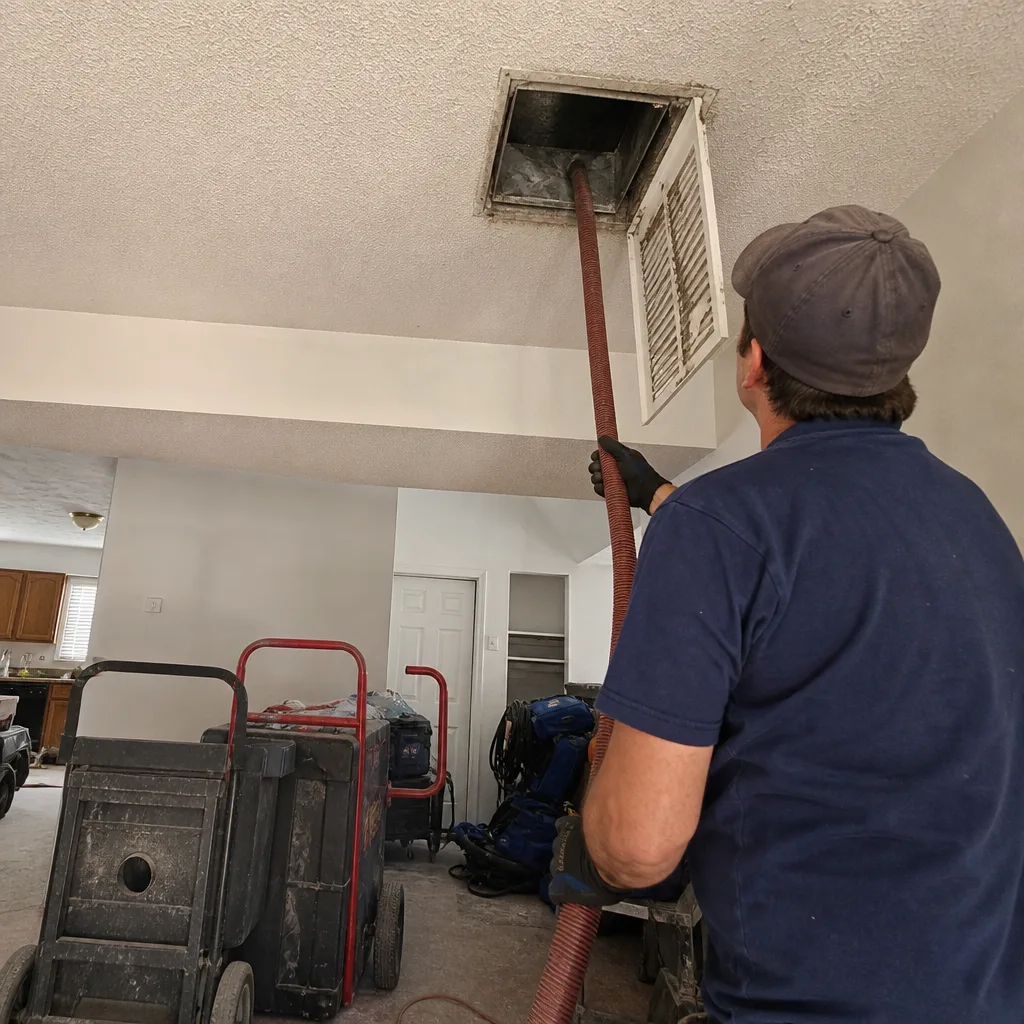 Before
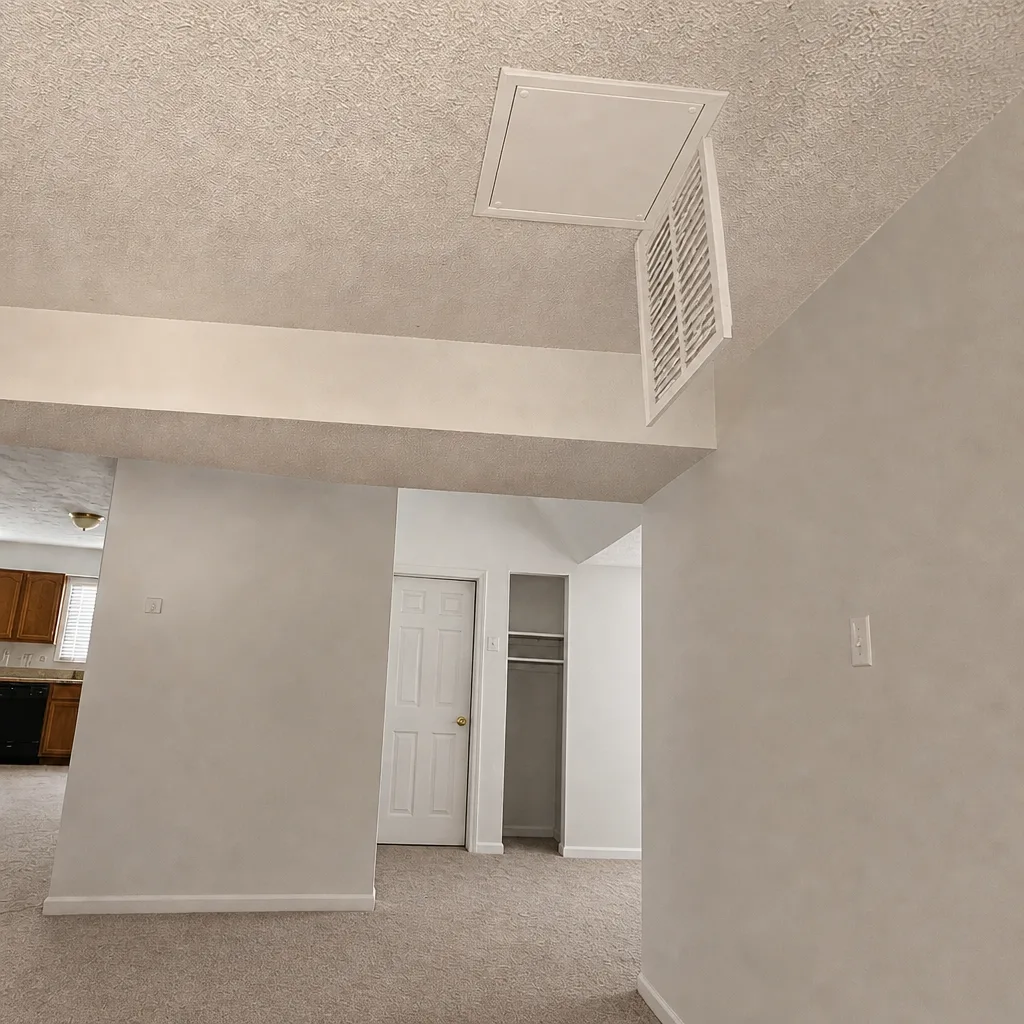 After
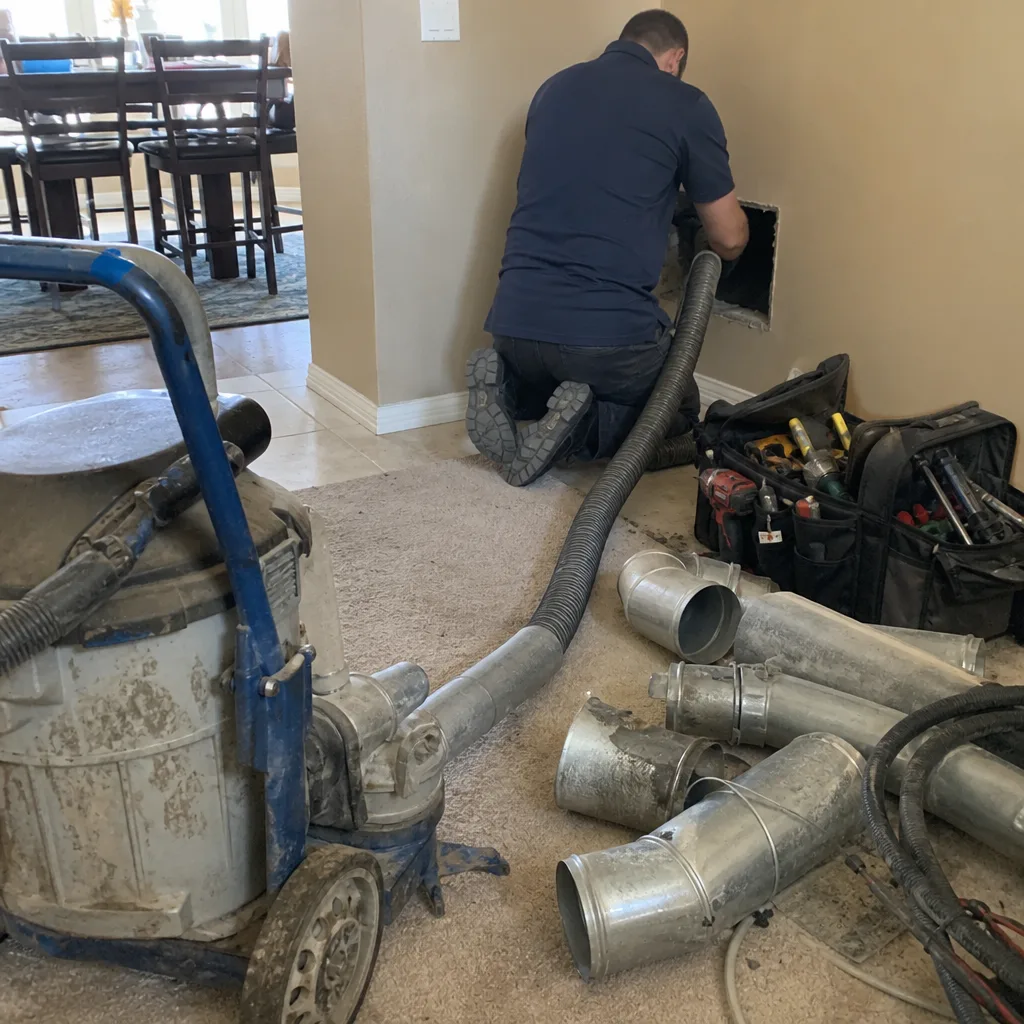 Before
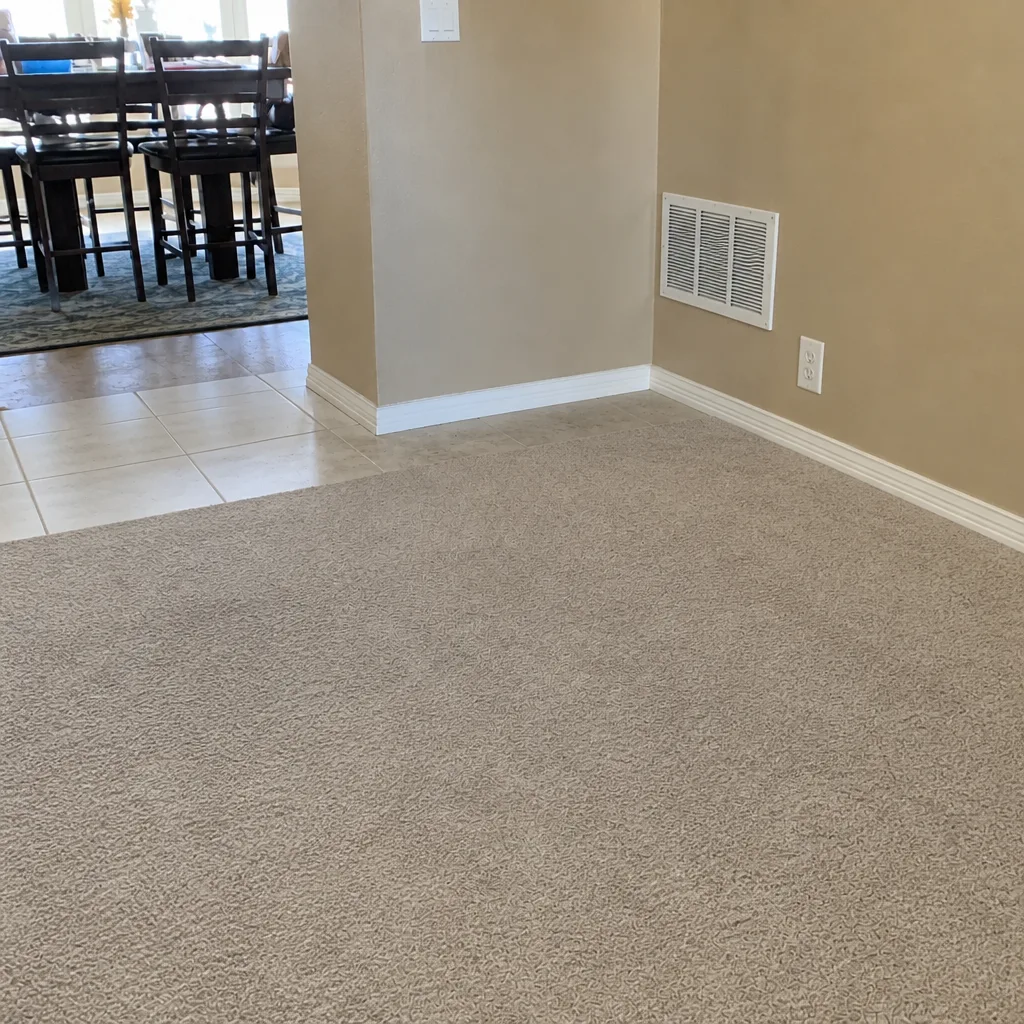 After
When to Call a Professional
Call when any of the “call now” findings in the previous section show up, or when your particle counter trend climbs for three readings in the same room without seasonal explanation. It’s also time to call if your annual assessment hasn’t happened in more than a year, if you’ve recently completed a renovation and drywall dust has moved through the system, or if an inspection flagged duct issues you don’t know how to verify. South Jordan Air Duct Cleaning offers free estimates in South Jordan – call (877) 820-9450. We work with the full system, not just a vacuum pass: cleaning, sealing, repair, and sanitizing as one scope, using equipment from Rotobrush, Nikro and Abatement Technologies, with whole-home filtration serviced through brands like Honeywell and Aprilaire. One visit, one scope, one written estimate agreed before work begins.
Also worth a call: if your dryer is taking longer than it used to. That’s a separate system from your air ducts, but it’s the same house and often the same visit. A full dryer vent cleaning is an easy safety check to fold into the same appointment, and it addresses a leading cause of residential house fires, which is a category of risk worth taking seriously even when everything seems fine.
Frequently Asked Questions
Once a year is a solid rhythm for most South Jordan homes, given the inversion-season particulate and the spring pollen load. Homes with pets, recent renovations, allergy sufferers or older ductwork may benefit from an assessment sooner. The checklist in this guide is designed to run monthly and quarterly between those annual visits.
Match the filter to your blower’s rated static pressure, not to the highest MERV number on the shelf. A filter that restricts airflow can strain the blower and shorten the system’s life. Check the spec plate on your air handler for the rated static pressure, then choose a filter whose pressure drop at your operating airflow stays within it.
Ask for before-and-after photos of the same locations – the plenum interior, the blower compartment and at least two trunk runs, taken from the same angle and lighting. Then retest your particle counter within the first week under conditions similar to your baseline. Photos plus a measured reading are the standard; a verbal assurance isn’t.
A bowed filter has lost its seal against the frame and is letting unfiltered air bypass the media, which pulls debris straight toward the blower housing. The cause is usually too much resistance from a filter rated higher than the blower can handle, or a return that’s undersized for the volume it’s pulling. Fix the cause, not just the filter.
Basic visual checks of accessible registers and returns are safe and useful. Anything that requires opening the duct, reaching inside a flexible run or pressurizing the system is not – the interior of flexible duct tears easily, and a tear you can’t see is a bigger problem than the dust. Leave the duct interior to professional equipment and trained hands.
Yes, and mostly in frequency. Older systems have had more opportunity for duct damage, disconnected joints and flex runs that have been re-routed, so quarterly checks of visible ductwork and return grilles are worth doing more carefully. A HVAC cleaning assessment is also worth having done at the same time as your annual duct assessment, so the blower and coil are evaluated alongside the airstream they serve.
The Bottom Line
The right air duct maintenance checklist for a South Jordan home is a diagnostic rhythm, not a reminder. Check filters monthly for shape and seal, inspect accessible boots and grilles quarterly, and schedule an annual professional assessment you can verify with photos. Track a particle counter baseline so you’re working from data. Watch the discoloration patterns, match your filter to your blower’s rated static pressure rather than to the highest MERV number, and use the watch-and-recheck versus call-now split to know which findings need action. A checklist run well catches the small problems – the bowed filter, the leaking boot, the musty smell in summer – while they’re still small.
If a finding on your checklist needs a professional look, or you’re ready to schedule the annual assessment, call (877) 820-9450 for a free estimate. We answer 24/7. Fast dispatch from 7am to 7pm, Sunday through Friday. We’re closed on Saturday, and a call outside dispatch hours is booked into the next opening.
When you’re ready to talk through the full picture, start with a visit to the South Jordan Air Duct Cleaning page and see how the five service lines fit together as one system – cleaning, sealing, repair, sanitizing and dryer vent safety under a single scope, so you’re not coordinating separate contractors for parts of the same problem.
Written by the team at South Jordan Air Duct Cleaning.