
Last updated November 25, 2026
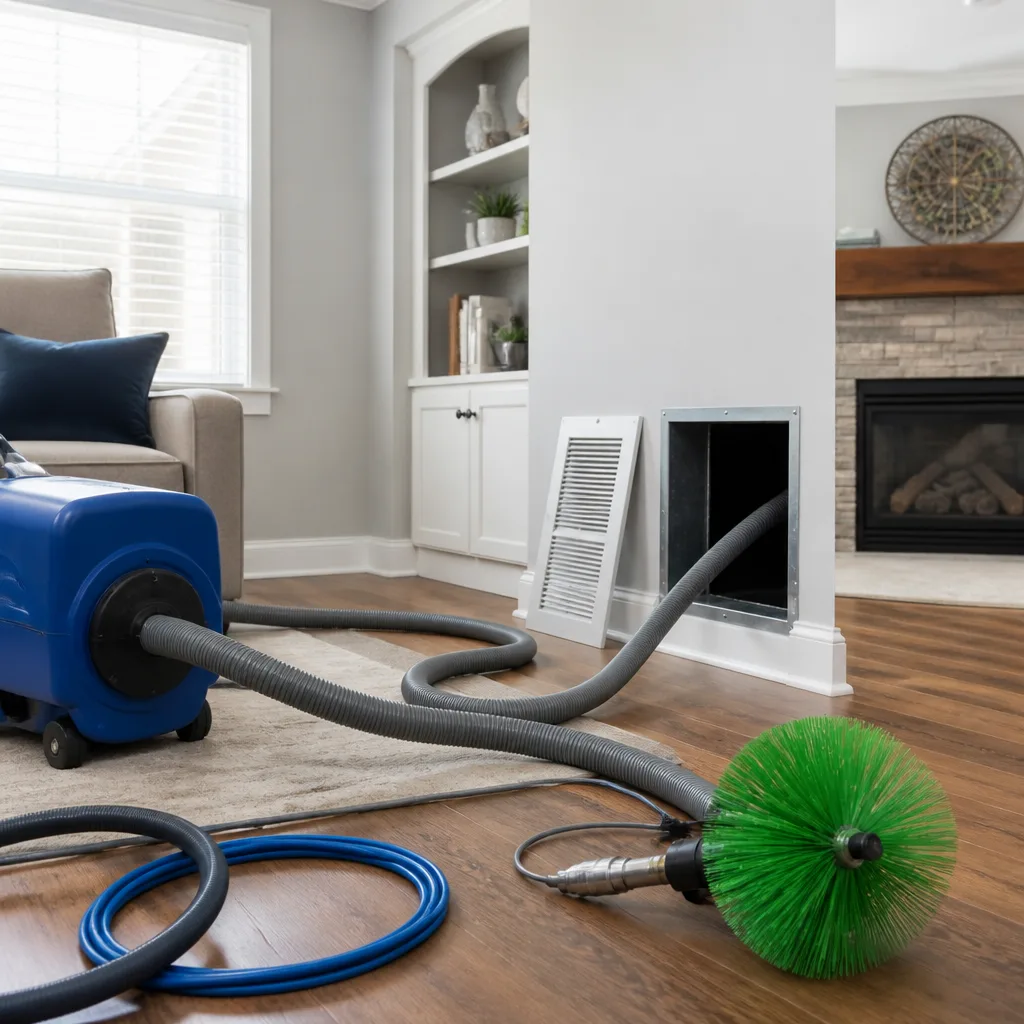 Whole-home duct cleaning
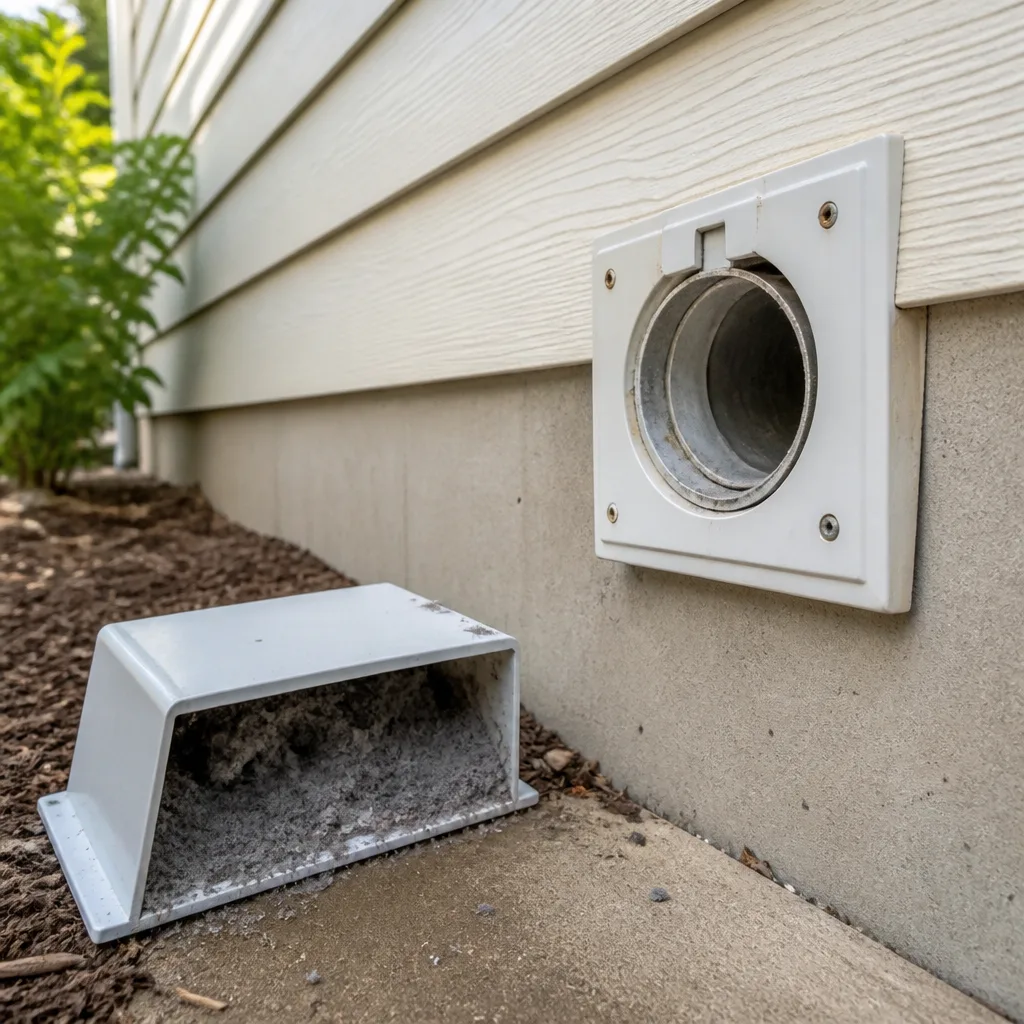 Dryer vent cleaning
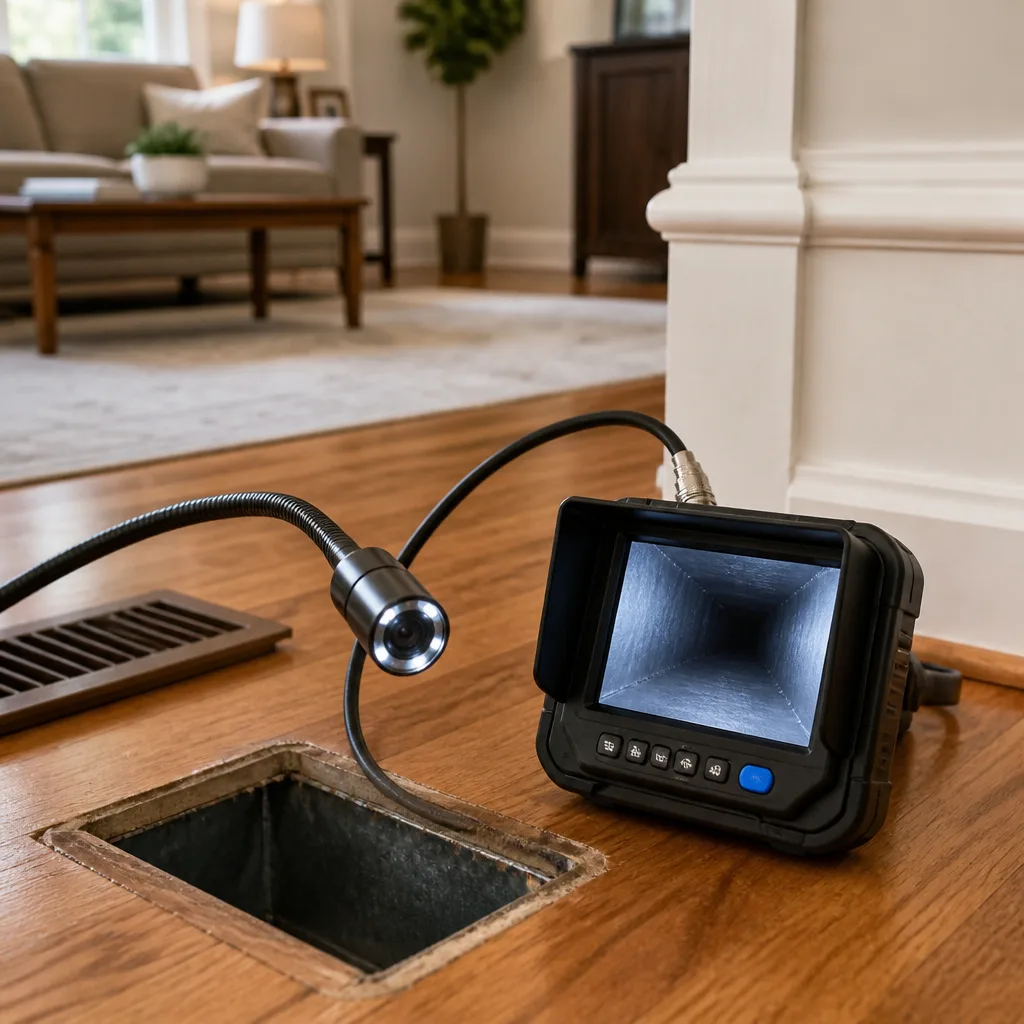 Camera inspection
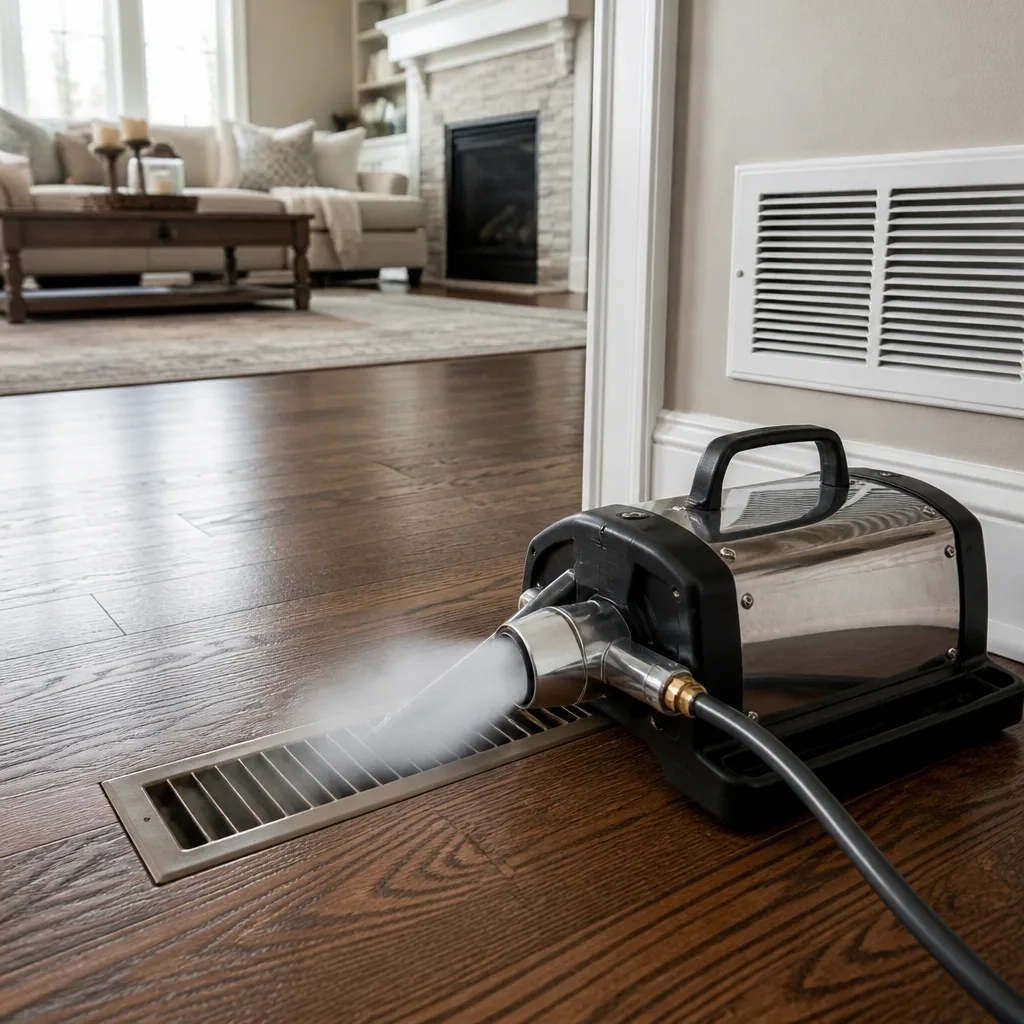 Sanitizing & deodorizing
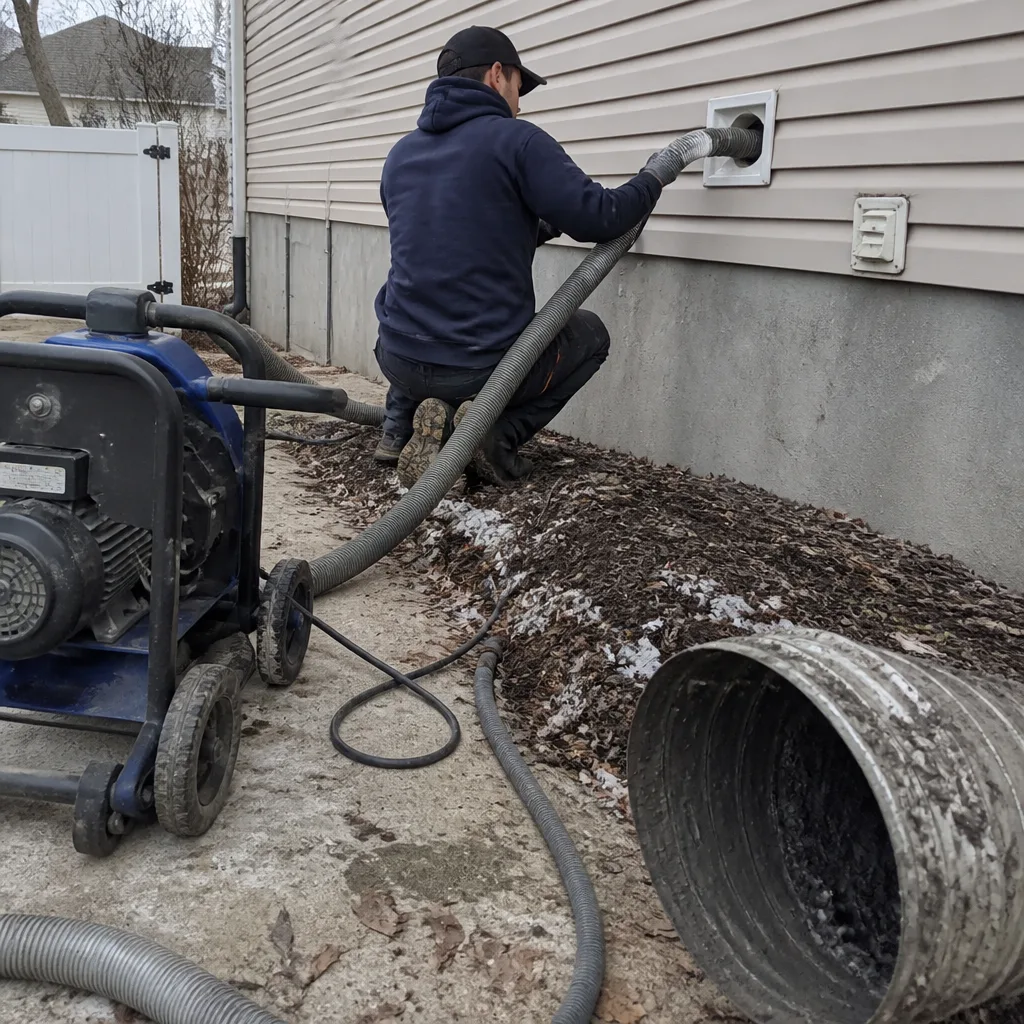
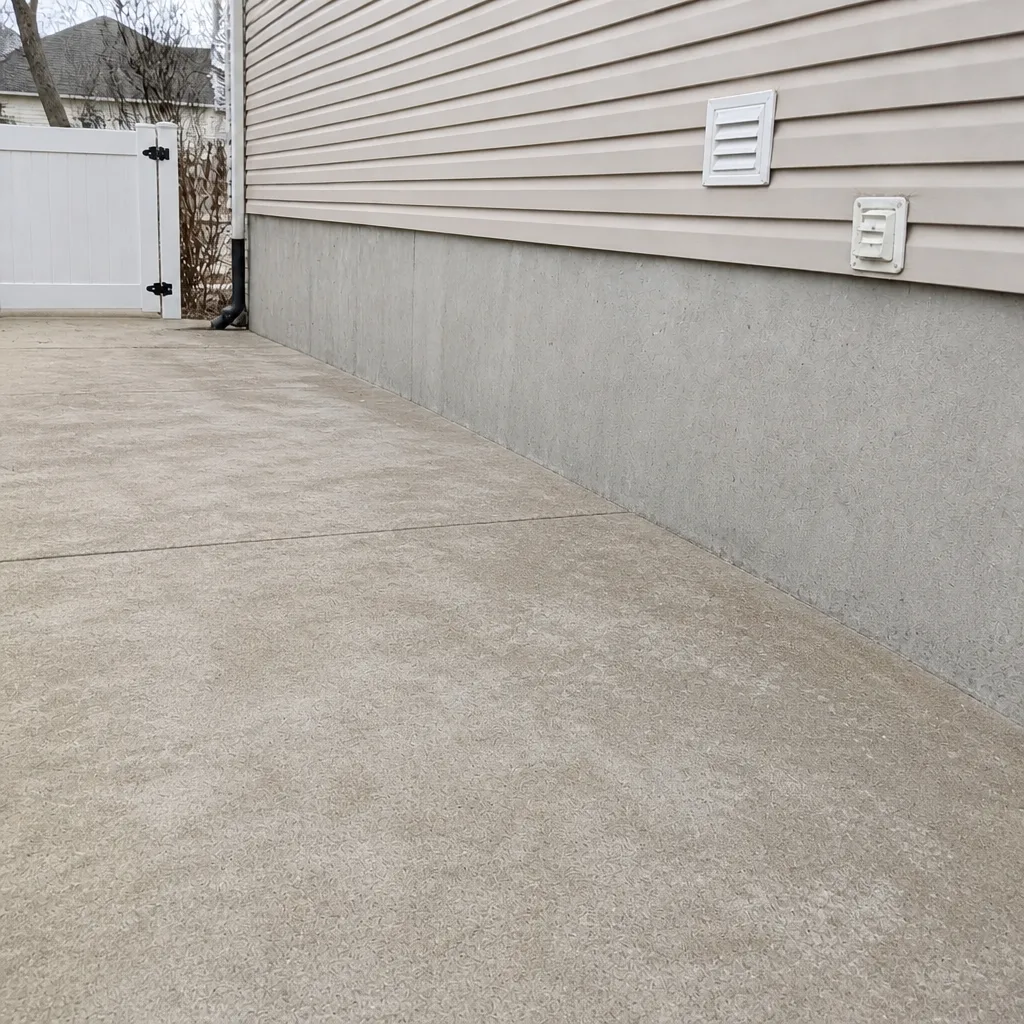
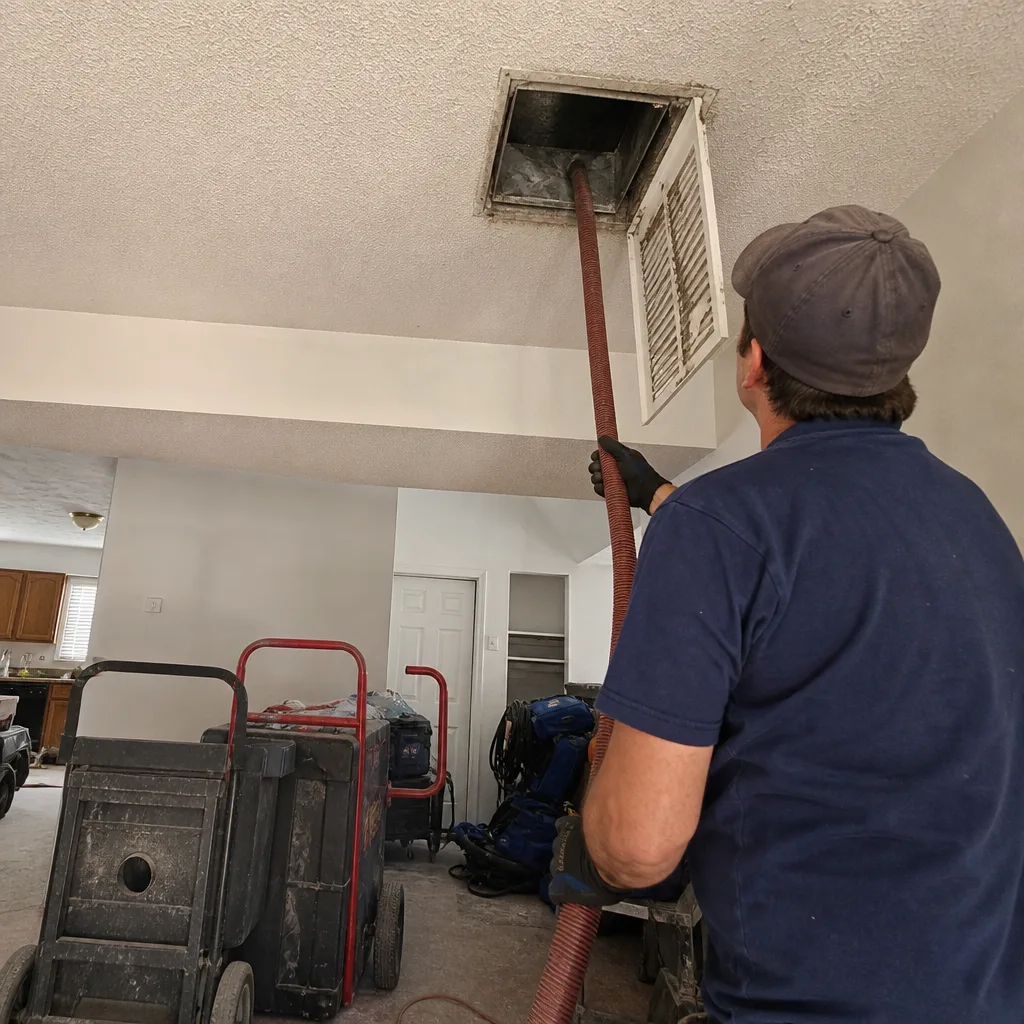
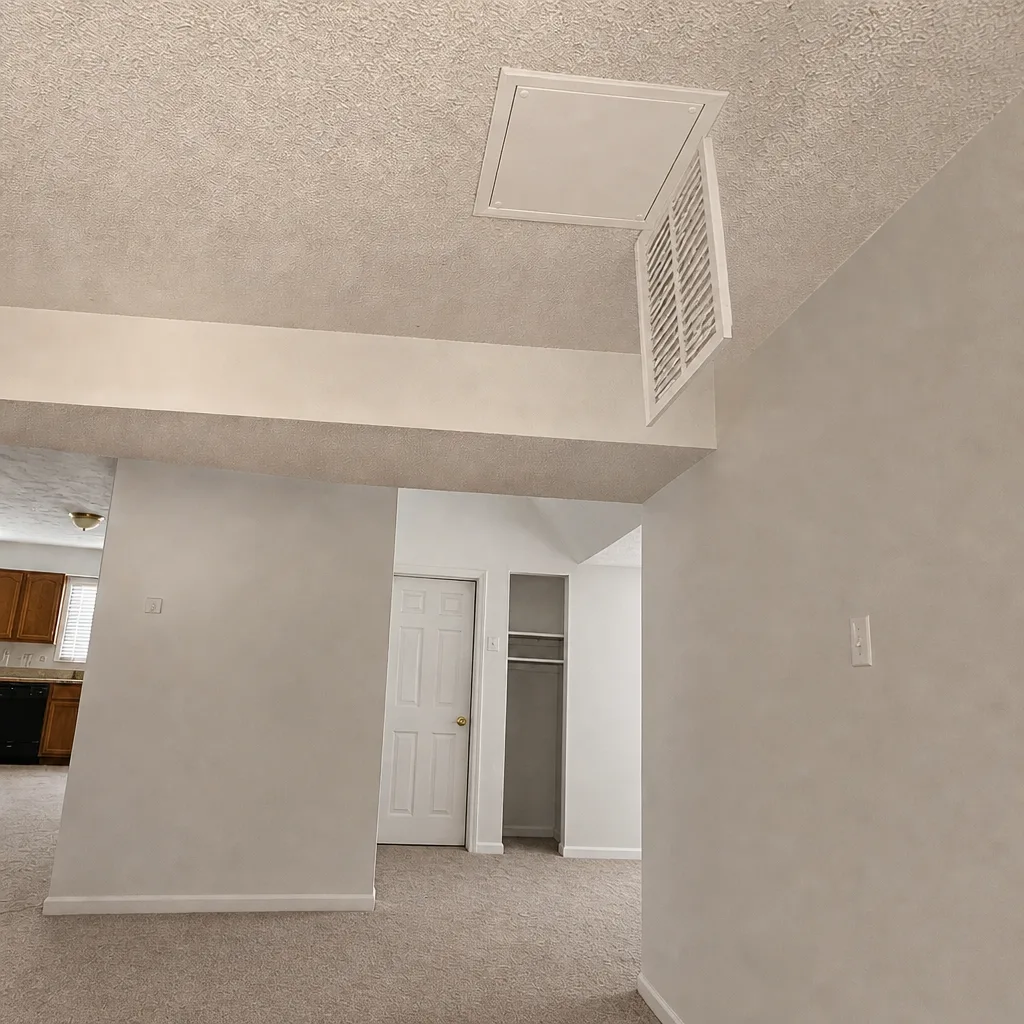
Whole-system duct and dryer vent check with before-and-after photos - you see exactly what came out of your vents
That "$99 whole-house special" is a bait ad - the real number appears once they are in your hallway, or the "clean" is a shop-vac at the register. We photograph the inside of your ducts before and after instead.
Air Duct Cleaning Emergency Preparedness Guide for South Jordan Homes
During a declared air quality emergency in Utah, the standard public health advice is to stay inside with the HVAC running. That advice works, until it doesn’t. If your duct system has failed damper seals, a dirty evaporator coil, or a return side that pulls from an unconditioned attic, the same system keeping you indoors is actively moving contaminated air through every room of the house. Clean ducts are only half the job. What we’ve seen across Salt Lake Valley homes is that preparedness comes down to configuration and documentation, not a frantic call the morning the sky turns orange. This guide walks through how South Jordan homeowners can tell whether their system is net protection or net contamination, what to upgrade before fire season, and how to act after a smoke event so decisions get made from facts instead of panic.
Quick Answer
Your duct system is a defense during a wildfire smoke or inversion event only if it is sealed, filtered correctly, and closed to outside air. If it leaks, draws from an unconditioned space, or runs a filter that starves the blower, it becomes the delivery route for the very particles you’re trying to avoid. The three things that matter most before an emergency are damper integrity, filtration sized to your blower’s rated static pressure, and a written baseline of your system so a technician can act fast.
Styles & brands we work with
- Whole-home duct cleaning
- Dryer vent cleaning
- Camera inspection
- Sanitizing & deodorizing
Table of Contents
- Is Your Duct System Protecting You or Contaminating You?
- What to Fix Before Fire Season
- Choosing Filters Without Starving Your Blower
- Post-Event Protocol: What to Do After a Smoke Event
- Construction Activity and Your HVAC Intake Risk
- What to Document Before an Emergency
- Inversion Season Readiness for South Jordan
- When Duct Work Needs a Professional
Is Your Duct System Protecting You or Contaminating You?
Most South Jordan homes were built assuming fresh air leaks in through every gap, and in normal conditions that’s fine. In an emergency it’s the problem. A duct system is a net protector when it’s sealed and pressure-balanced. It’s a net contaminator when it leaks and the return side sits in an attic or garage with different air than the living space.
Here’s the mechanism to understand. When the blower runs, the supply side pushes air out and the return side pulls air in. If a return duct has a joint that’s come loose in an unconditioned attic, that joint becomes a straw. It draws attic air, insulation fibers, and whatever else is in that space into the return trunk and delivers it into bedrooms. Similarly, a supply trunk that leaks in an attic loses conditioned air before it reaches the room, driving up run time and pulling more outdoor air through the building shell to replace it.
Three conditions tell you the system leans toward contamination rather than protection:
- Visible gaps or disconnected joints on accessible duct runs in attics, garages, or crawlspaces. South Jordan’s dry climate shrinks duct tape and mastic over time, so joints that were tight at construction can open up.
- A return register in a garage, attic, or mechanical closet that is not sealed off from the living space. This is common in older layouts and is a direct route for outdoor air during smoke events.
- A filter that is too restrictive and has collapsed or bowed inward. When a filter loads up beyond the blower’s ability to pull through it, the blower loses static pressure and airflow drops, so the system starves for air while it’s needed most.
We check all three during an air duct cleaning assessment. If you’ve never had that baseline, this is the year to get one before the next smoke event catches you flat-footed.
What to Fix Before Fire Season
Utah’s fire season and inversion season both reward preparation. The time to check the system is in the shoulder months, not the week the air quality index spikes. Prioritize these items in this order:
- Damper integrity. Fireplace and fresh-air intake dampers should close fully. Test each one by hand if you can reach it, or have a technician confirm. A damper that sticks 10% open is a 10% open window to the outdoors.
- Fresh-air intake controls. Many newer South Jordan homes have a controlled fresh-air intake tied to the HVAC or a separate ERV. Understand where it is, what it does, and how to override or shut it during a smoke event. If you can’t find it, that’s your first task.
- Return-side sealing. Seal any return joints or register boots open to the attic, garage, or crawlspace. This is the highest-value fix for smoke exposure. It also reduces dust year-round.
- Filter upgrade sized for the blower. Move to a filter rated for your system, not the highest MERV on the shelf. We’ll cover this next.
- Duct cleaning if the system has never been cleaned or has visible debris. A dirty return trunk will hold and re-release particulate for a long time. Cleaning it before the season means you start the emergency from a clean baseline, not from a reservoir.
If any of these items sound unfamiliar, that’s normal. Most homeowners have never been told how their fresh-air intake works, and that’s exactly why we walk through it before recommending any work. Duct Repair & Sealing covers the sealing and reconnection piece, and it’s usually the most consequential fix for emergency readiness.
Choosing Filters Without Starving Your Blower
The instinct during a smoke event is to install the thickest, highest-MERV filter you can find. That instinct is often wrong. Every filter adds resistance, and every blower is rated for a maximum external static pressure. Exceed it and airflow falls, the coil gets cold and ices, and the evaporator becomes a wet surface that traps particulate. You’ve cleaned the air going into the filter but contaminated the system downstream of it.
The right filter is the one your blower can move air through comfortably. Three practical rules:
- Match the filter slot’s size exactly. A filter that doesn’t fully cover the slot leaks air around the edges, which is the same as no filter at all.
- Step up MERV gradually. If you were running MERV 8 and want better filtration for smoke, try MERV 11 first and watch for ice on the coil, longer run times, or a blower that sounds strained. If those appear, step back down.
- Change more often during a smoke event. A MERV 11 that typically lasts a season may load in weeks when outdoor particulate is heavy. Have spares on hand and photograph the filter when you change it, so you have a record of how fast it loaded.
For whole-home filtration that’s selected and serviced properly, we work with Honeywell and Aprilaire systems. Both set the standard for residential filtration and humidity control, and both let us recommend a filter housing that’s sized to the blower rather than guessed at from the filter aisle at a hardware store.
Post-Event Protocol: What to Do After a Smoke Event
After smoke clears, the question most South Jordan homeowners ask is whether a filter change is enough. The answer depends on two things: whether the system was protected during the event, and how much particulate made it past the filter.
Here’s the step-by-step we recommend:
- Change the filter immediately. Don’t wait for the calendar. Smoke loads a filter in days, not months. Save the old one or photograph it for your records.
- Run the blower on low for a day with windows closed. This helps clear residual particulate from the duct interior through the new filter.
- Check the evaporator coil for visible loading. If you can see the coil, look for a gray or brown film. A loaded coil will re-release particulate into the airstream and needs professional cleaning.
- Assess the duct interior. Have a technician scope a sample of the return trunk and one supply run. If visible particulate remains after several days of clean-air operation, the system needs professional remediation, not another filter swap.
- Confirm the damper settings are back to normal after the event ends, so you don’t unknowingly run on an open or closed intake for months.
This is where HVAC cleaning matters. A surface-level filter change addresses only the air that passes through the filter. It doesn’t address a coil that’s caked, a blower wheel that’s loaded, or duct walls that have become a reservoir. When we come out after an event, we use Rotobrush and Nikro equipment because they agitate and extract, which is what’s needed to actually remove smoke residue rather than just redistribute it.
Construction Activity and Your HVAC Intake Risk
South Jordan has been built out and rebuilt significantly in recent years, and that has a direct air-quality consequence for existing homes. Construction corridors mean grading, demolition, concrete cutting, and site work near neighborhoods that used to be quiet. Wind moves that dust, and your HVAC intake does what HVAC intakes do: it pulls in whatever is nearby.
Three adjustments matter when construction is active near you:
- Know where your outside air intake is. If you have a fresh-air intake on a wall facing an active site, close or restrict it during heavy dust days and open it back up when work is quiet.
- Check your outdoor condenser and intake screens weekly. Freshly cut concrete and excavation dust coat condenser coils and screen filters fast. A dirty condenser coil drives up energy use and can stress the compressor during the exact weeks you’re running it hardest.
- Shorten your filter interval. If you normally change quarterly, change at half that interval during active construction adjacent to your home. Photograph each filter to spot load patterns.
We don’t say this to alarm you. Construction dust is a normal fact of a growing community. It becomes an indoor-air problem only when the system is drawing that dust in through an unsealed return or an open intake. Sealing and a sensible filter schedule solve most of it. When the load is heavy enough to reach the coil and blower, that’s a job for HVAC cleaning rather than another filter.
What to Document Before an Emergency
In a smoke event, decisions get made fast and often with incomplete information. The single most useful thing South Jordan homeowners can do is gather two pages of documentation now, so a technician or a family member can make sound choices under stress.
Here’s what to put in a folder, physical or digital:
- System basics. Make and model of the furnace and air handler, the size of the filter slot, and the rated maximum external static pressure if it’s on the data plate.
- Filter specs. The exact MERV and dimensions of the filter you’re currently running, plus a note on how it performed (any icing, noise, or long run times).
- Duct layout sketch. A rough drawing showing where returns are, where the fresh-air intake is, and where dampers are located. Photograph any damper handles.
- Damper and intake notes. Which position is open, which is closed, and how to override the fresh-air intake if you need to.
- Photos of accessible duct joints so you have a “before” reference to check against after a sealing job or a smoke event.
- Technician contact. The number for a duct and HVAC professional you can reach when things get serious. Ours is (877) 820-9450, and we answer 24/7.
If you’ve never had your system cleaned or assessed, a professional air duct cleaning visit is the fastest way to build this documentation while the ducts are accessible and visible. The technician can photograph joints, note filter specs, and walk you through the fresh-air intake in a single visit.
Inversion Season Readiness for South Jordan
Winter inversions in the Salt Lake Valley trap particulate near the ground for days. That’s a different exposure profile from a summer wildfire: the event lasts longer, the calendar is less predictable, and the outdoor air is worse than usual for weeks. Duct readiness for inversion season comes down to a few specific checks.
- Sealed returns. Same principle as fire season, but the exposure is longer, so the consequence of a leaking return is cumulative. Seal it before October, not after the first bad air day.
- Filter schedule adjusted. Inversion particulate loads a filter steadily. Change monthly during an extended inversion, and check the filter for visible gray loading each week.
- Duct interior clean. A clean duct starts the inversion season with no reservoir. A duct that hasn’t been cleaned in years will load and re-release particulate as the blower cycles.
- Sanitizing step considered. If the system has had visible microbial growth, or if the home has had moisture intrusion, an air quality and sanitizing service addresses the growth at the source. We use Guardsman-line treatments as part of that process, which is the recognized standard for protective coating and antimicrobial product work.
If your duct system needs remediation-level attention, our air duct cleaning assessment will tell you whether standard cleaning is enough or whether sanitizing or sealing is called for. For the sanitizing step specifically, Guardsman-line treatments are what we reach for because they’re formulated for the application, not repurposed from another trade. The point of air quality and sanitizing is not to mask a smell. It’s to remove the growth and put down a protective coating so the system doesn’t re-contaminate.
When Duct Work Needs a Professional
Some preparedness work is DIY-friendly: changing filters, photographing joints, testing dampers by hand. Other work is not, and the moment you reach that line, a professional call is the right move. Call if you can see disconnected duct joints in the attic, if you smell musty or smoky air coming from supply registers after a smoke event, if the evaporator coil has visible loading, or if your return register is open to a garage or attic. Duped into thinking that’s a one-filter fix is the most common mistake we see. It isn’t. South Jordan Air Duct Cleaning offers free estimates in South Jordan. Call (877) 820-9450. We answer 24/7. Fast dispatch from 7am to 7pm, Sunday through Friday.
Common Mistakes to Avoid
- Installing the highest-MERV filter during a smoke event without checking blower ratings. This starves airflow and can ice the coil, making the indoor air worse, not better.
- Trusting a system that was never sealed. Many South Jordan homes have open returns to the attic or garage, and running the blower during an emergency pulls that air directly into bedrooms. Seal before you need it.
- Changing the filter but skipping the coil and blower check. A loaded coil re-releases particulate every time the system runs. Filters don’t clean the system downstream of them.
- Ignoring the fresh-air intake. A stuck-open intake defeats everything else you do during a smoke event. Find it, label it, and know how to close it.
- Waiting until the air quality index spikes to book an assessment. Every homeowner in the valley calls at once. Baseline work done in shoulder months is easier to schedule and cheaper to plan.
- Letting construction dust load the condenser. A coated condenser coil in summer is a costly repair that a quick hose-down would have prevented.
- Documenting nothing. In an emergency, a technician spends half a visit figuring out what they could have known from a page of notes. Write it down now.
See the difference
 Before
 After
 Before
 After
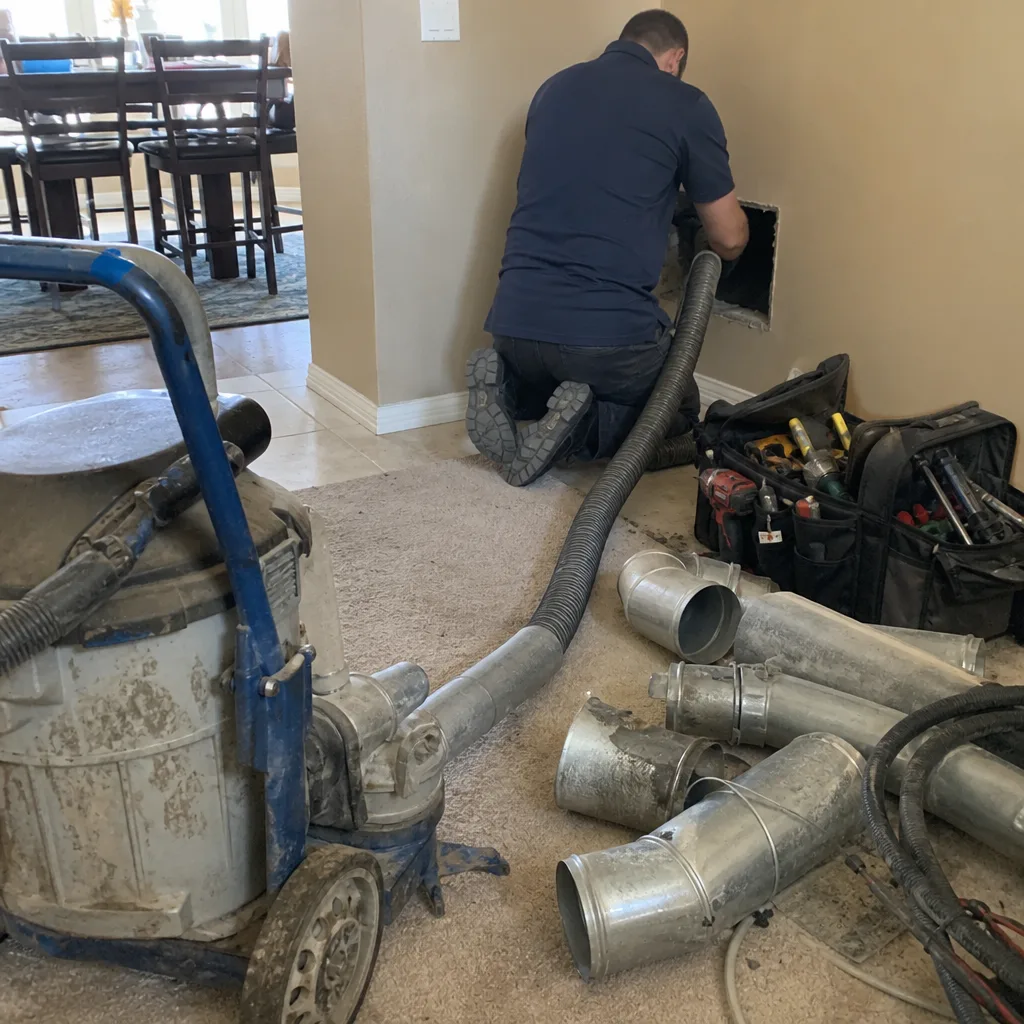 Before
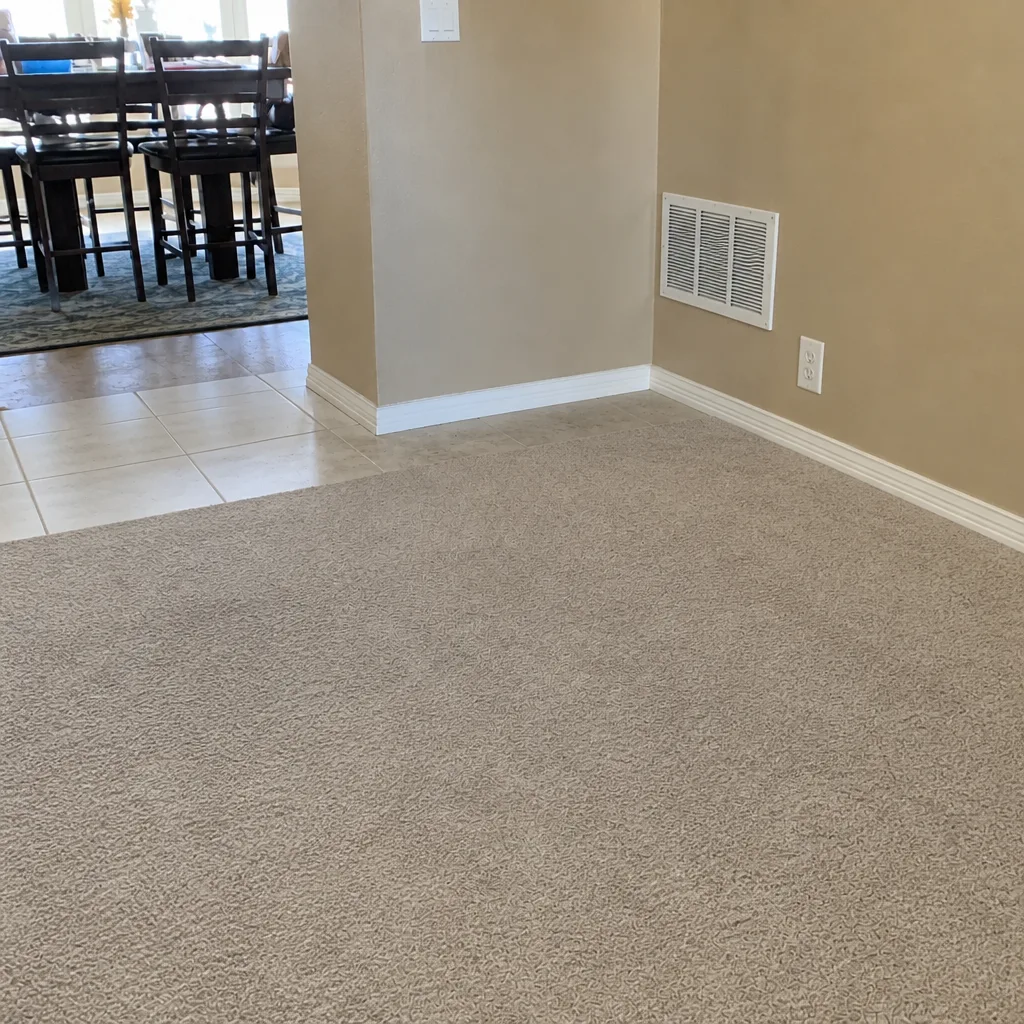 After
Frequently Asked Questions
Only if it’s sealed, draws return air from the living space, and runs a filter sized for your blower. A leaking return, a stuck-open fresh-air intake, or an oversized filter turns the system into a contamination route. Have a technician check those three items before fire season and you’ll know where you stand.
Most whole-home air duct cleaning in the South Jordan area runs in the range of $300 to $700 depending on home size, number of registers, and system accessibility, with repair, sealing, or sanitizing quoted separately. Estimates are free. Call (877) 820-9450 for an exact quote.
Yes. Change the filter as soon as the event ends or as soon as the air clears enough to open the house briefly. Smoke loads a filter in days rather than months, so the calendar schedule doesn’t apply. If the new filter loads quickly or the coil has visible film, that’s the signal to book professional HVAC cleaning.
Yes, particularly in homes with sealed returns and a return air path through an attic or garage. A dirty return trunk acts as a reservoir, releasing particulate into the airstream as the blower cycles. South Jordan’s dry climate also shrinks duct tape and mastic over time, so joints that were tight at construction often open up. Sealing and cleaning address the source.
System make and model, filter dimensions and MERV, a rough sketch of duct layout and damper locations, photos of accessible joints, and a technician contact. That file lets a decision get made in minutes instead of hours. We walk South Jordan homeowners through building that documentation during a routine duct assessment.
Not always. If construction dust reached the duct interior, the filter loading pattern will show it within a few weeks. If the filter loads fast and the coil shows visible film, professional cleaning is warranted. If filters load at the normal rate, sealing and a shorter filter interval are usually enough.
The Bottom Line
Emergency preparedness for a South Jordan home’s air system is not about panic-buying filters the morning the sky turns orange. It’s about sealing the returns, sizing the filter to the blower, understanding where the fresh-air intake is, and documenting the system so decisions under stress are informed. That work locks in the value of every other preparedness effort. It also overlaps with the seasonal work you’d do anyway: cleaning, repair, and sanitizing all reinforce each other. If you’ve been putting it off, the shoulder months are the right window. Set up a baseline assessment before fire season and inversion season return.
Contact Us
If this guide has raised questions about your own system, we’re happy to walk through them. Call South Jordan Air Duct Cleaning at (877) 820-9450 for a free estimate. We answer 24/7. Fast dispatch from 7am to 7pm, Sunday through Friday. Our technicians have up to 10 years of experience, and we work with Rotobrush, Nikro, and Abatement Technologies equipment to clean, seal, and protect your entire air delivery system under one visit.
Written by the team at South Jordan Air Duct Cleaning.