
Top Signs You Need Air Duct Cleaning Service – Don’t Ignore These
Most homeowners start looking for signs of dirty ducts by staring at the vent covers. That’s backwards. Visible dust on a register usually means your filter is doing its job and catching what it can. The real problem sits inside the supply plenum and return air box, coating the duct walls in a layer of debris that no filter change will touch – and that buildup quietly throttles airflow to every room in the house. If you’d rather have someone look than climb into the attic with a flashlight, call (877) 820-9450 for a free estimate.
How do I know if my ducts need cleaning? (The short answer)
You know your ducts need attention when the system stops performing the way it used to, not when you finally see dust on a vent. Some of the clearest signals are performance signals: rooms that never heat or cool evenly, utility bills that creep up without a rate change, and an HVAC unit that short-cycles because it’s fighting restricted airflow. In our experience across South Jordan, homeowners often call us about visible dust when the underlying issue has been building for months.
Here’s the practical difference between a filter symptom and a duct symptom:
- Dirty filter: dust collects on the filter face, the filter loads up quickly, and changing it restores airflow. The problem lives at one point in the system.
- Dirty duct: airflow stays weak even with a fresh filter. Debris coats the interior of the supply runs and return box, and the whole system has to push harder to move the same air.
- Contamination: you smell something musty when the fan kicks on, or you see particulate blowing out of a register right after startup. That’s a contamination issue, not a filtration one.
If you’ve already swapped filters twice this season and the house still feels stuffy, it’s time to stop guessing. This is the point where a professional inspection beats another trip to the hardware store.
Performance signals most homeowners miss
Airflow problems show up as comfort complaints long before they show up as visible contamination. These are the early indicators we look for during an inspection, and they’re the ones most people dismiss as “just how the house is.”
- Uneven room temperatures. If the bedroom over the garage runs five degrees warmer than the hallway, that’s a distribution issue. Restricted ducts in the runs feeding that room are a common cause.
- Rising utility bills. When the blower has to run longer to satisfy the thermostat, the energy bill climbs. A slow increase with no rate change is worth investigating.
- Short-cycling. A furnace or air handler that starts and stops frequently is often fighting static pressure from restricted ductwork. The unit reaches its limit switch, shuts off, and repeats.
- Weak register airflow. Hold your hand in front of a supply register. If the flow is noticeably weaker than it was a few years ago, the system has lost capacity somewhere.
None of these signals are dramatic on their own. Together, they tell a story about a system working harder than it should. When that pattern is clear, air duct cleaning is one of the first things worth ruling out.
South Jordan-specific triggers: construction dust, inversion season, and wildfire smoke
Air quality here isn’t the same as air quality in a humid, tree-filled climate, and the contaminants loading into South Jordan ductwork reflect that. Three local patterns tend to push debris into a home’s air system faster than routine use alone.
Post-construction dust. New subdivisions and remodeling projects across South Jordan generate fine particulate that drifts well beyond the lot line. Drywall dust, sawdust, and concrete particulate settle into return air intakes and stay there. If you’ve had work done on your home or live near active construction, your ducts picked up an extra load.
Inversion-season particulate. The Wasatch Front is prone to winter inversions that trap fine particulate in the valley. Homes in South Jordan pull that air in through every intake, and the duct system becomes a settling chamber for it. It builds up quietly over the season.
Wildfire smoke infiltration. Summer smoke events push fine particles into homes through gaps in the envelope and through the HVAC intake. Smoke residue leaves an odor and a coating that standard filtration doesn’t remove from duct walls.
These aren’t reasons to panic. They’re reasons to check the system on a schedule rather than waiting for a smell to announce the problem. Duct Repair & Sealing and Air Quality & Sanitizing are the two service lines that specifically address this kind of local loading.
How to inspect your own ducts with a flashlight and phone camera
You can do a basic check in fifteen minutes without any special tools. It won’t replace a professional inspection, but it will tell you whether it’s time to schedule one.
- Pull a floor or wall register. Take off the cover and shine a flashlight into the boot – the metal or duct-board transition where the duct meets the room. Look for visible debris accumulation on the walls.
- Photograph the duct interior. Reach your phone as far as you safely can into the opening (don’t force anything) and take a flash photo. Zoom in later. Dust is normal; clumps, fibrous matting, or a coating that looks like lint is not.
- Check the return air intake. The return usually has a larger filter grille. Look behind the filter for debris that bypassed it, which often points to leakage or a poorly seated filter frame.
- Smell the air at startup. Turn the fan on and stand near a register. Musty, stale, or “dirty” smells indicate microbial growth or contamination somewhere in the run.
- Look for streaking around registers. Dark streaks on the wall around a supply grille usually mean air is escaping at the boot seal or carrying dust to the edge of the opening.
Take photos before you call anyone. They’re useful for comparison later, and a professional can look at them to understand what you’re seeing.
When cleaning alone won’t fix it
Some problems are contamination problems. Others are structural problems in the system that no amount of cleaning will solve. Cleaning the inside of a leaky duct system just means the ducts get dirty again faster.
Signs that point to repair rather than cleaning alone:
- Crushed or disconnected duct runs. Flexible duct that has kinked or torn in the attic sends conditioned air into the attic instead of your bedroom.
- Leaking joints. Duct tape that has dried out or mastic that has cracked opens a path for unconditioned attic air to enter the system.
- Design issues. Some systems were installed with undersized returns or poorly planned runs. Cleaning won’t fix a system that was designed to underdeliver.
In those cases, Duct Repair & Sealing is the right starting point, followed by cleaning once the system is sealed. One crew handling the whole system beats coordinating a separate duct cleaner and an HVAC contractor who don’t talk to each other.
When to call a pro: if your own inspection turns up visible debris, an odor, or a compromised seal you didn’t expect, or if the system is showing more than one performance signal at the same time, that’s the point to bring in someone who can diagnose the whole system rather than chasing symptoms room by room.
The Bottom Line
Visible dust on your registers isn’t the warning sign. Performance is. Uneven room temperatures, rising bills, short-cycling, weak airflow, and dust you can see inside the duct walls are the signals that matter, and by the time they all show up the system has usually been underperforming for a while. In South Jordan, construction dust, inversion-season particulate, and wildfire smoke all accelerate the loading.
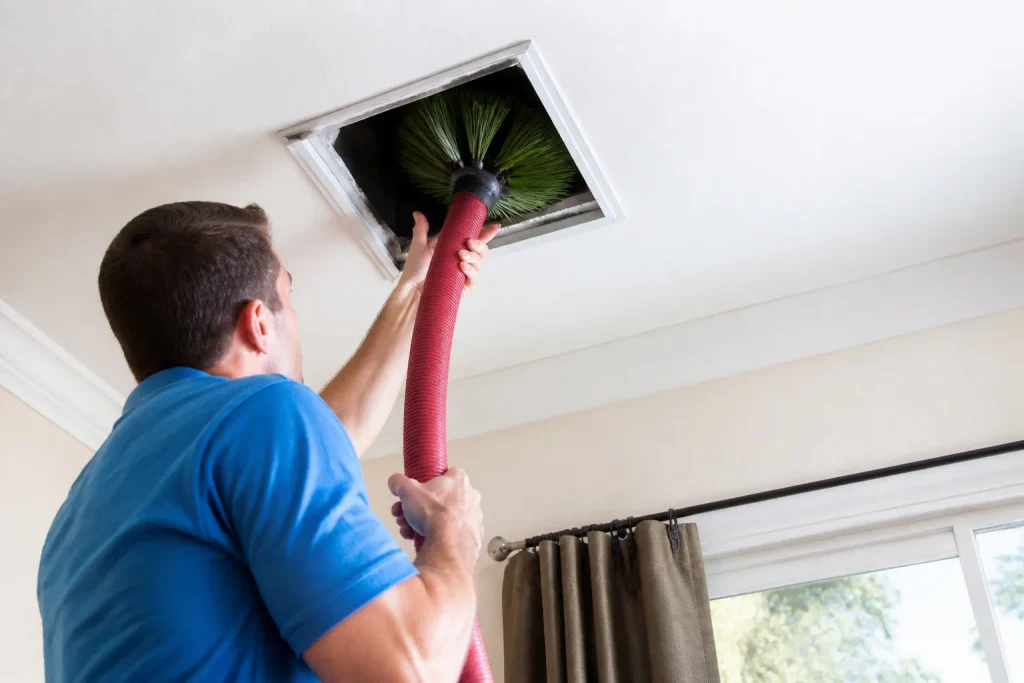
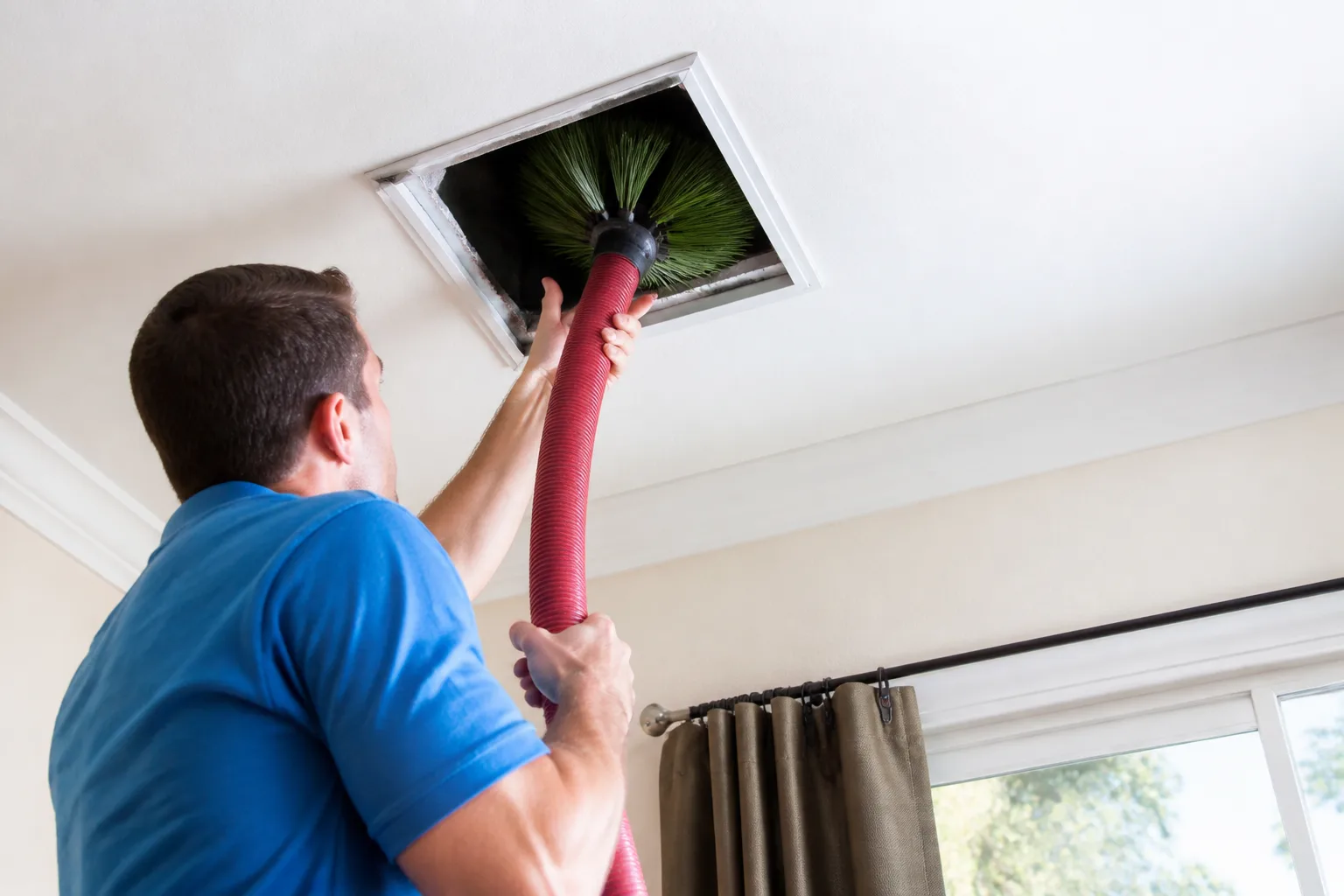
Our technicians have up to 10 years of experience and use Rotobrush and Nikro equipment for full-system work – the kind of equipment built for the job rather than borrowed from a warehouse. If you’re ready to stop guessing, South Jordan Air Duct Cleaning offers free estimates. Call (877) 820-9450. We answer 24/7. Fast dispatch from 7am to 7pm, Sunday through Friday.
Related services in South Jordan: alongside standard air duct cleaning, we handle dryer vent cleaning and HVAC cleaning as part of a full-system approach. You can read more about the company at South Jordan Air Duct Cleaning.
Frequently Asked Questions
Most homes don’t need annual cleaning. A common guideline is every three to five years for a typical household, sooner if you’ve had a renovation, noticed a musty smell, or live where particulate loading is high. South Jordan’s inversion season and construction activity push some homes toward the shorter end. If your filters are loading faster than usual or airflow has dropped, that’s a better timing signal than a calendar. Call (877) 820-9450 for an exact assessment – estimates are free.
Not reliably. Dust on a register usually means the filter is catching debris, not that the ducts are dirty. The real evidence sits inside the plenum, return air box, and the supply runs, which you can’t see without a flashlight and a camera. A proper check means shining light inside the boot and photographing the duct interior. If you’re not comfortable doing that, a professional inspection will answer the question quickly.
It can, when the cause of the airflow problem is debris accumulation on duct walls or return restrictions. It won’t fix a crushed duct, a leaking joint, or a system that was designed with undersized returns – those need repair. This is why we start by identifying the pattern of symptoms rather than assuming cleaning is the answer. If cleaning is the fix, the improvement usually shows up as more even airflow and less short-cycling.
Commercial-grade equipment matters because consumer-grade vacuums can’t generate enough negative pressure to pull debris from long runs. Rotobrush and Nikro systems are the two leading lines in professional duct cleaning, and we use both. A whole-system approach often involves Abatement Technologies equipment for contaminate control during sanitizing, and we also work with Honeywell and Aprilaire filtration and purification products when cleaning alone doesn’t address the source. Call (877) 820-9450 to talk through what your system might need – estimates are free.
Written by the team at South Jordan Air Duct Cleaning.
Need Air Duct Cleaning Help?
Call South Jordan Air Duct Cleaning - the local pro we connect you with is licensed and insured, here with fast help in South Jordan.
(877) 820-9450