
Air Duct Cleaning: Repair or Replace? How South Jordan Homeowners Decide
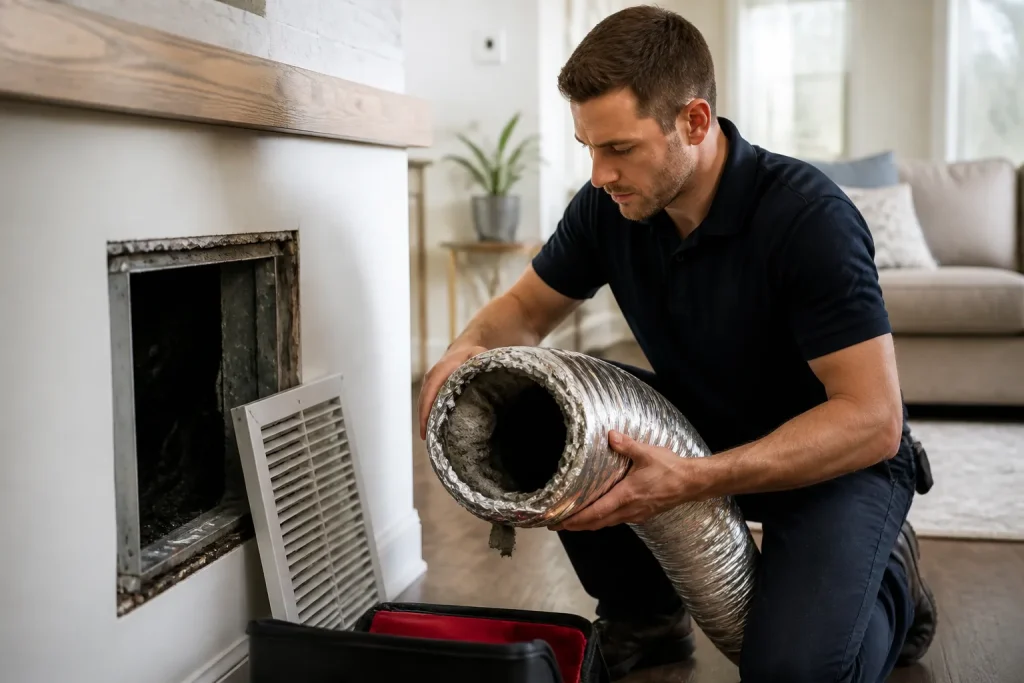
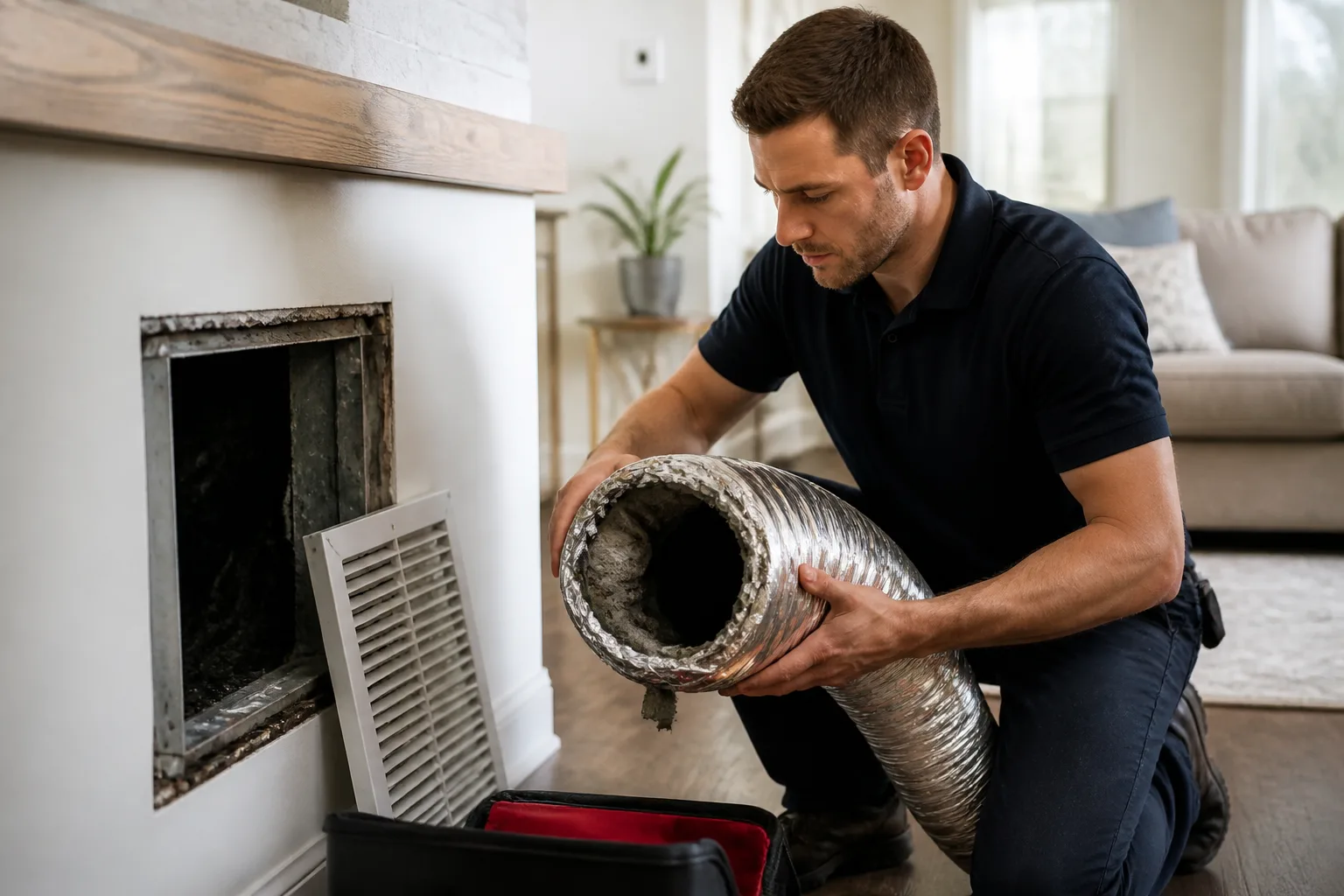
Most homeowners assume the answer is always “clean first.” That’s wrong often enough to matter. Cleaning a duct system with collapsed flex sections or a torn inner liner doesn’t restore airflow – it pushes debris through a system that’s already failing. In South Jordan, where a large share of homes went up during the 1990s and 2000s boom with original flex duct, that distinction decides whether you spend money on a cleaning or on a repair. The inspection matters more than the cleaning quote.
Key Takeaways
- Contamination is a cleaning problem. Structural failure is a replacement problem. They’re not the same.
- Original flex duct from the 1990s and 2000s building cycle is often at or past its functional lifespan.
- Sealing (mastic or aerosol-based) is a third path that can extend duct life without full replacement.
- Ask for camera footage and a written condition report before anyone quotes a cleaning.
Which duct conditions mean cleaning is the right call?
Cleaning works when the duct is structurally sound but dirty. That’s the test: the duct has to be able to hold and move air as designed after the debris comes out. If it can, professional cleaning with equipment like Rotobrush or Nikro source removal systems does real work – it pulls accumulated dust, construction debris, and settled particulate out of the system rather than stirring it into the airstream.
Conditions where cleaning is usually the right first move:
- Visible dust buildup on register covers and inside supply runs, with normal airflow at the vents.
- Post-renovation debris – drywall dust, sawdust, and insulation fibers pulled into return ducts during a remodel.
- Musty or stale odors that trace back to the duct interior, not to a failing component elsewhere.
- Recent move-in with unknown service history – you don’t know what the previous owner did.
- Allergy-season complaints that track with system runtime rather than with outdoor pollen alone.
In each of these cases the duct is doing its job mechanically. It’s just carrying more than it should. Cleaning restores it, and a sealing step afterward often keeps it that way longer.
When does duct replacement become the only effective fix?
Replacement is the right answer when the duct itself has failed as a structure, not just as a surface. Cleaning a failing system doesn’t fix airflow – it moves debris around inside a pathway that can’t deliver air correctly no matter how clean it is. We’ve seen this often in South Jordan homes built during the 1990s and 2000s construction boom, where original flex duct has now had twenty to thirty years to sag, kink, and lose its liner.
Conditions where cleaning won’t solve the problem:
- Collapsed flex duct. Sections crushed or pinched to the point that they can’t carry designed airflow. Cleaning can’t un-collapse them.
- Failed inner liner. The plastic layer inside flex duct tears or delaminates, and the fiberglass insulation behind it starts entering the airstream. Cleaning makes this worse, not better.
- Rodent or pest damage. Chewed duct, contaminated insulation, and gaps that can’t be sealed effectively.
- Disconnected or crushed runs. Ducts that came loose at fittings or were damaged during later work in the home.
- Moisture and biological growth inside the duct itself, where the material is compromised, not just the surface.
These are structural problems. They need duct repair and replacement, not a cleaning wand.
How do you read an inspection report or camera footage?
Two things matter when you watch the camera feed or review the report: contamination level and structural integrity. Most homeowners focus on the first and miss the second. Ask to see both, and ask the technician to walk you through what you’re looking at.
What to check on the footage:
- Is the duct round and straight? Flex duct that sags, kinks, or bottlenecks in the frame is losing airflow by design.
- Is the inner liner intact? You should see a clean, smooth inner surface. Tears, peeling, or exposed fiberglass are structural failures.
- Are joints and connections tight? Look for gaps at fittings, boots, and transitions. Loose joints leak air, which throws off system balance.
- Is the dust loose or adhered? Loose dust is a cleaning job. Adhered or embedded debris, especially with discoloration, needs a closer look at the surface underneath.
- Are there signs of moisture? Staining, soft spots in the duct wall, or visible biological growth are stop signs for cleaning alone.
A written report should give you a clear verdict on each run: clean, seal, repair, or replace. If a quote for cleaning arrives without footage or a written condition report, that’s your cue to ask why.
What about the economics – is partial replacement smarter than full replacement?
Often, yes. Full duct replacement is expensive and disruptive, and it’s rarely necessary. In most South Jordan homes the duct system has a mix of healthy runs and failing ones. The smart path is to replace the failed runs, clean the healthy ones, and seal all of them. That combination usually gets you most of the benefit of full replacement at a fraction of the cost and mess.
Rough decision guide:
- All runs sound, normal contamination: clean and seal. Done.
- One or two runs failed or damaged, rest sound: replace those runs, clean and seal the rest.
- Most runs compromised, widespread liner failure or moisture: full replacement is usually the honest recommendation.
That middle path is where most of the value lives. It’s also why the inspection step is worth doing carefully rather than rushing to a cleaning bid. The written estimate sets the final price, and a good one will separate the work into those categories so you can see exactly what you’re paying for.
What does duct sealing add to the decision?
Duct sealing is the third path, and it’s often the smartest one. Whether you clean, partially replace, or do both, sealing is what addresses the leaks that make a duct system underperform even when it’s clean and intact. In our experience the sealing step is what South Jordan homeowners notice most, because it shows up on the energy bill and on how even the room temperatures feel.
Two common approaches:
- Mastic sealing – a brush- or trowel-applied sealant at joints, boots, and transitions. Best for accessible areas like attics and crawlspaces.
- Aerosol-based sealing (often called Aeroseal) – a fine sealant mist introduced into the duct system that finds and closes small leaks from the inside. Effective when the leaks are in hard-to-reach runs or behind finished walls.
Sealing extends duct life and improves efficiency without full replacement. It also protects the cleaning work you paid for – a sealed system stays cleaner longer. If you’re weighing cleaning versus replacement, add sealing to the conversation before you commit to either.
When to call a pro
If your inspection turns up collapsed duct, torn liner, or moisture, stop and call before anyone touches the system. Cleaning a failing duct is at best wasted money and at worst a way to push contaminated material into your living space. Every job we quote starts with a visual and camera inspection so the recommendation is based on what’s actually in the duct, not on a default assumption.
Related services in South Jordan: once the duct decision is made, the same visit can cover air duct cleaning for the healthy runs, dryer vent cleaning for the vent safety check that often gets skipped, and HVAC cleaning for the air handler and coil side that feeds the whole system. For a full overview of how we work, see South Jordan Air Duct Cleaning.
The Bottom Line
Cleaning and replacement aren’t two ends of one slider. They’re two answers to two different questions. Cleaning fixes contamination. Replacement fixes structure. Sealing fixes leaks, and often makes the first two options last longer. Get a camera inspection with a written condition report, ask the technician to walk you through what you’re seeing, and use the partial-replacement-plus-cleaning-plus-sealing path when it fits. That’s usually the most honest and most cost-effective route in a South Jordan home, especially older ones still running original flex duct from the 1990s or 2000s.
We use professional-grade equipment every job – Rotobrush and Nikro for source removal, Abatement Technologies for contamination control, and sealing and sanitizing products built for the same work. There’s no magic in it. Just the right tools and a straight verdict on what your duct actually needs.
If you’re in South Jordan and need help, South Jordan Air Duct Cleaning offers free estimates – call (877) 820-9450. We answer 24/7. Fast dispatch from 7am to 7pm, Sunday through Friday.
Frequently Asked Questions
Most whole-home air duct cleaning jobs in South Jordan land in the low-to-mid hundreds of dollars, depending on square footage, number of runs, and the condition of the system. The written estimate sets the final price, and if your inspection turns up failed duct runs, that repair or replacement is quoted separately and in writing before any work starts. Call (877) 820-9450 for an exact quote – estimates are free.
Cheap quotes usually skip the camera inspection, quote a single number for any home, and clean only the main trunk and the closest runs. Whole-system cleaning takes longer and costs more to perform – the equipment has to be professional-grade and the technician has to actually inspect and document the work. Ask what the quote includes and what it doesn’t. Bring before-and-after photos of your own ducts, not stock images, and a written condition report on each run. Call (877) 820-9450 for an estimate that itemizes what you’re actually getting.
Ask for before-and-after photos of your own ducts and a camera review at the end of the visit, run by run. That’s the test that matters. A written report combined with visual evidence tells you what was cleaned, what was repaired or replaced, and what was sealed. On any job you can’t verify, don’t sign off. Call (877) 820-9450 with questions about your system before you book anything.
Most South Jordan homes do well with a cleaning every few years, and sooner if you’ve had a remodel, a new pet, a move-in with unknown service history, or a family member with allergy trouble that tracks with system runtime. Homes running original flex duct from the 1990s or 2000s need an inspection on its own schedule – structural issues don’t wait for the cleaning interval. Call (877) 820-9450 to schedule an inspection and get a straight answer on what your duct needs.
Only if contamination is the cause. If the airflow problem traces to collapsed flex duct, a failed inner liner, or disconnected runs, cleaning won’t fix it – repair or replacement of the failed sections will. The camera inspection is what tells you which problem you actually have. Call (877) 820-9450 and we’ll help you sort out the cause instead of guessing.
Written by the team at South Jordan Air Duct Cleaning.
Need Air Duct Cleaning Help?
Call South Jordan Air Duct Cleaning - the local pro we connect you with is licensed and insured, here with fast help in South Jordan.
(877) 820-9450